
Vitamin C is one of the most researched and validated skincare ingredients available. Consistent with its role as an antioxidant throughout the body, topical vitamin C provides measurable protection, brightening, and anti-aging benefits that few other single ingredients can match.
This guide covers the science behind vitamin C skincare, the different forms available, how to choose the right product, and how to incorporate it into your routine for maximum results.
What Is Vitamin C in Skincare?
The most potent and studied form of vitamin C in skincare is L-ascorbic acid, the pure, active form of vitamin C. It is also the most unstable, which is why formulation quality matters enormously with vitamin C products.
Other forms include ascorbyl glucoside, sodium ascorbyl phosphate, and magnesium ascorbyl phosphate, these are more stable but need to be converted by the skin into active L-ascorbic acid, making them less immediately potent but gentler and more stable for sensitive skin.
Proven Benefits of Vitamin C Serum
1. Powerful Antioxidant Protection
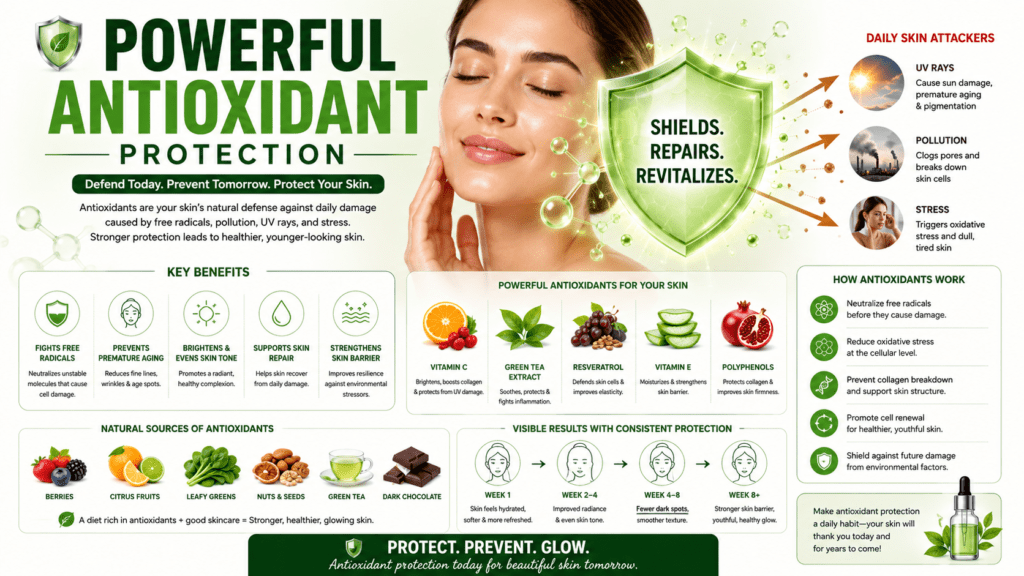
Free radicals, unstable molecules generated by UV radiation, pollution, and metabolic processes, damage collagen, elastin, and cell DNA. This damage is cumulative and is a primary driver of premature skin ageing.
Vitamin C neutralises free radicals by donating an electron to stabilise them before they can cause damage. Applied in the morning, it creates a layer of antioxidant protection that persists for 72 hours, supplementing the protection provided by SPF.
2. Brightening and Glow
Vitamin C inhibits tyrosinase, the enzyme responsible for melanin production. This directly reduces the formation of new dark spots and, with consistent use, fades existing hyperpigmentation. The result is a visibly brighter, more even skin tone.
Most people notice initial brightening within 4–6 weeks. Significant fading of dark spots takes 3–6 months of consistent daily use.
Consistent vitamin C use also helps create the radiant base needed for flawless Dewy Glass Skin Makeup looks.
3. Collagen Synthesis
Vitamin C is an essential cofactor in collagen synthesis, without it, the body cannot produce collagen at all (severe deficiency causes scurvy, characterised by skin breakdown). At optimal levels, topical vitamin C stimulates fibroblasts to produce more collagen, improving skin firmness and reducing the depth of fine lines over time.
4. Reduces Redness and Inflammation
Vitamin C has documented anti-inflammatory properties that reduce erythema (redness) and support skin barrier repair. This makes it beneficial for rosacea-prone skin and post-inflammatory hyperpigmentation following acne.
5. Synergy with SPF
Vitamin C does not replace SPF, it complements it. While SPF prevents UV photons from reaching the skin, vitamin C neutralises the free radicals generated by any UV that does penetrate. Together, they provide significantly better protection against photoageing than either alone.
How to Choose a Vitamin C Serum
Form
L-ascorbic acid (LAA) is the gold standard for potency. If your skin is sensitive, ascorbyl glucoside or sodium ascorbyl phosphate are gentler alternatives that convert to active vitamin C in the skin.
Concentration
• 10%: beginner-friendly, good for sensitive skin
• 15%: most effective starting point for normal skin
• 20%: maximum clinically studied concentration for brightening
• Above 20%: minimal added benefit, increased irritation risk
pH
L-ascorbic acid is most effective at pH 2.5–3.5. A low pH formula feels slightly tingly on the skin, which is normal. Many brands do not publish their pH, making independent reviews and brand transparency important.
Packaging
Vitamin C oxidises rapidly when exposed to light, air, and heat. Effective packaging includes dark amber or opaque bottles, airtight pumps (not droppers that introduce air repeatedly), and aluminium tubes. Avoid products in clear glass or jar packaging.
Additional Ingredients
Vitamin C performs best when formulated with supporting antioxidants. Vitamin E stabilises ascorbic acid and provides additional antioxidant protection. Ferulic acid further stabilises both vitamins C and E while doubling their photoprotective effectiveness, the C+E+Ferulic combination is the most clinically studied formulation.
Best Vitamin C Serums at Every Budget
Budget Under $20
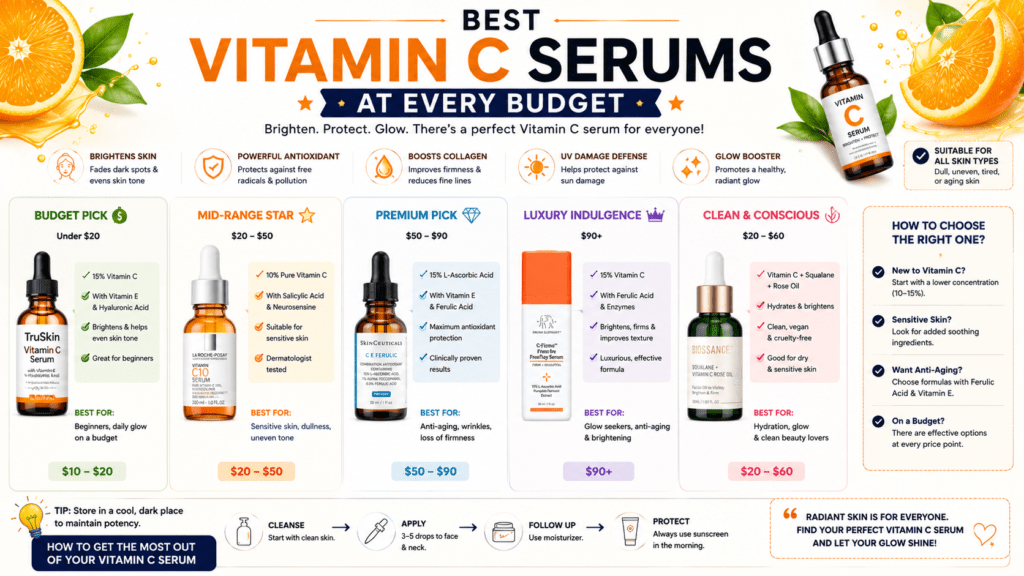
The Ordinary Ascorbic Acid 8% + Alpha Arbutin 2% is well-formulated and affordable. TruSkin Vitamin C Serum provides good potency at an accessible price. Both use L-ascorbic acid.
Mid-Range $20–$60
La Roche-Posay Pure Vitamin C Face Serum (10%) is dermatologist-recommended and gentle. Paula’s Choice C15 Super Booster (15%) is highly effective with strong clinical backing. Timeless Vitamin C+E Ferulic Serum is the most affordable version of the gold-standard C+E+Ferulic formula.
Investment $60+
Skinceuticals C E Ferulic is the original clinically studied C+E+Ferulic formula and remains the benchmark. The Drunk Elephant C-Firma Vitamin C Day Serum is a well-formulated alternative at a lower price point.
How to Incorporate Vitamin C Into Your Routine
17. Cleanse your face
18. Apply 2–4 drops of vitamin C serum to dry or slightly damp skin
19. Press gently onto the face, neck, and chest
20. Wait 30–60 seconds for absorption
21. Apply moisturiser over the serum
22. Apply SPF as the final skincare step
Healthy, protected skin makes transitioning into a flawless Day to Night Makeup Look much easier.
Side Effects and Who Should Be Cautious
Tingling and Initial Sensitivity
Low-pH vitamin C serums cause a mild tingling sensation on first use, this is normal and typically reduces as skin adjusts. If the tingling is uncomfortable, switch to an every-other-day schedule and build up.
Purging
Vitamin C does not cause purging in the same way as retinol or AHAs, it does not accelerate cell turnover. If breakouts occur, it is more likely a reaction to another ingredient in the formula (commonly essential oils or fragrances in poorly formulated products).
Not Compatible With
• Benzoyl peroxide, oxidises and degrades vitamin C
• AHAs and BHAs in the same application, can cause over-exfoliation
• Retinol on the same step, use vitamin C AM and retinol PM
Signs Your Vitamin C Serum Has Oxidised
• Yellow serum has turned dark orange, brown, or rust-coloured
• The smell has changed to an unusual or rancid odour
• Skin feels more irritated than usual with the same product
An oxidised vitamin C serum is not harmful but it has lost its effectiveness and may cause irritation. Replace it and improve storage conditions (dark, cool, airtight) for the next bottle.
Frequently Asked Questions
Managing expectations is essential with vitamin C. The antioxidant protection benefits are immediate but invisible, you will not see them. The brightening benefits take weeks. The anti-aging benefits take months. The people who abandon vitamin C after two weeks are the ones who miss the results that happen at week six.
Final Thoughts
A well-formulated vitamin C serum applied every morning is one of the most impactful single additions you can make to any skincare routine. For even better results, pair vitamin C with a complete Anti-Aging Skincare Routine designed for long-term skin health.
Frequently Asked Questions
Q: What does vitamin C serum actually do for your skin?
A: Vitamin C serum neutralises free radicals from UV and pollution, brightens dull skin, fades dark spots and hyperpigmentation, stimulates collagen production, reduces redness, and improves overall skin tone. Results are visible within 4–6 weeks of consistent daily use.
Q: When should I apply vitamin C serum in my routine?
A: In the morning, after cleansing and before moisturiser and SPF. Morning application maximises the antioxidant protection against UV and environmental pollutants throughout the day.
Q: What is the best concentration of vitamin C for beginners?
A: Start at 10% for sensitive skin or 15% for normal skin. Once tolerance is established, 20% gives more potent brightening results. Concentrations above 20% have diminishing returns and increase irritation risk.