


Starting makeup can feel confusing. Walk into any beauty store and you may see hundreds of foundations, primers, palettes, brushes, sprays, powders, and lip products. Do you really need all of them?
No.
If you are new to makeup, you do not need a huge collection. You need a few useful products that help you create a clean, simple look. The best makeup for beginners should be easy to use, suitable for your skin, and practical for everyday life.
A beginner makeup kit can start with just a few basic products:
- Moisturizer and sunscreen
- Tinted moisturizer or foundation
- Concealer
- Blush
- Mascara
- Eyebrow product
- Lip product
- One simple eyeshadow palette
- Setting powder or setting spray
- A few basic tools
You do not need to buy everything on your first shopping trip.
A professional makeup artist will usually tell beginners to learn the basics before buying advanced products. A beautiful makeup look depends more on good product selection and correct application than on having an expensive collection.
Your skin type also matters. Someone with oily skin may prefer a lightweight, oil-free foundation. Someone with dry skin may enjoy a hydrating formula. If you have sensitive or acne-prone skin, look for products labeled non-comedogenic or designed for sensitive skin.
Dermatologists also recommend keeping your skincare routine simple. Clean skin, moisturizer, and sunscreen should come before makeup. Following a proper skincare routine before applying makeup helps create a smoother base and can improve how your makeup looks throughout the day. The American Academy of Dermatology recommends broad-spectrum SPF 30 or higher for daily sun protection, followed by makeup if desired.
So, what should you actually buy first?
Let’s create a simple, practical beginner makeup kit.
What Makeup Should a Beginner Buy First?
A beginner should start with products that improve the face without making application difficult. The most useful first purchases are concealer, blush, mascara, a lip product, and a light base product such as tinted moisturizer or foundation.
You do not need a full contour kit, five eyeshadow palettes, or expensive brushes immediately. For example, a beginner can create a polished everyday look with moisturizer, sunscreen, concealer, blush, mascara, brows, and lip color. This routine takes only a few minutes and looks natural.
Pro Tip: Buy products based on the makeup looks you actually want to wear. If you prefer natural makeup, a heavy foundation may sit unused in your drawer.
Mini Conclusion: Start small, learn each product, and add more only when you need it.
1. Moisturizer and Sunscreen Come First
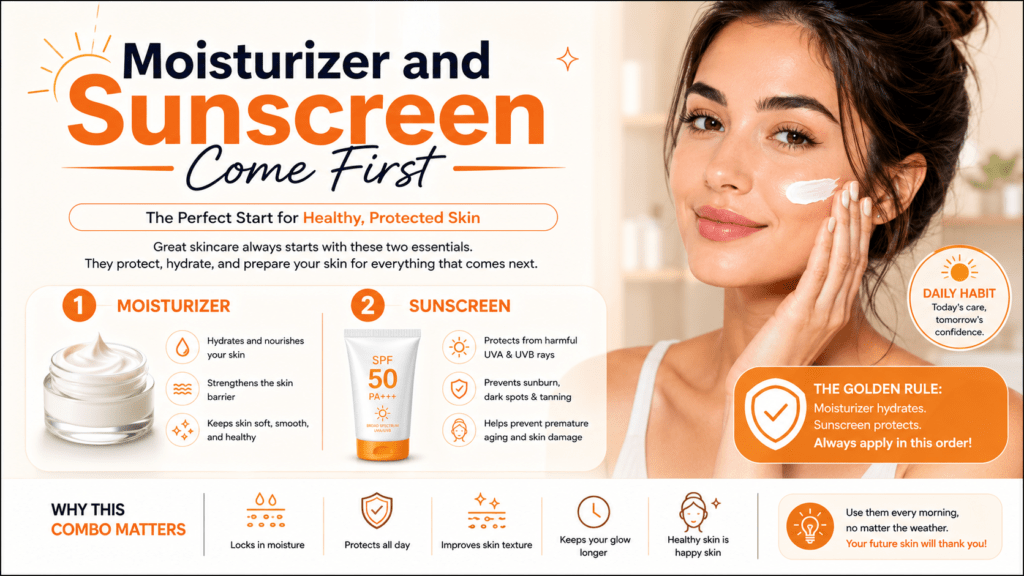
Although moisturizer and sunscreen are not technically makeup, they create the foundation for better makeup application. Dry skin can make foundation look flaky, while excess oil can cause makeup to slide. A lightweight moisturizer helps create a smoother surface.
Sunscreen should also be part of your morning routine. The AAD recommends broad-spectrum SPF 30 or higher and placing sunscreen after skincare but before makeup.
How to Choose Them for Your Skin
For oily skin, choose a lightweight, oil-free, or non-comedogenic moisturizer. For dry skin, look for hydrating ingredients such as glycerin or hyaluronic acid. Sensitive skin may benefit from simple formulas with fewer potential irritants.
Common Mistake: Applying makeup immediately after a thick skincare layer. Give skincare a little time to settle so your makeup does not slide.
Expert Advice: If you have acne-prone skin, Cleveland Clinic recommends choosing oil-free, water-based, non-comedogenic makeup and removing makeup before bed.
2. Choose Tinted Moisturizer or Foundation
You do not necessarily need a full-coverage foundation as your first base product. Many beginners find a tinted moisturizer, skin tint, or lightweight foundation easier to apply.
A light base can even out skin tone while still allowing your natural skin to show. For example, if you have a little redness around your nose, you can apply the product mainly in that area instead of covering your entire face.
How to Find the Right Shade
Test foundation on your jawline rather than your hand. Your face and neck may have a different color from your hands.
Pay attention to your undertone:
| Undertone | Common Clues |
| Warm | Golden, yellow, or peach tones |
| Cool | Pink, red, or bluish tones |
| Neutral | A balance of warm and cool tones |
Pro Trick: Start with a thin layer. You can always add more coverage, but removing too much product is difficult.
Before: A heavy layer may look cakey.
After: A thin, blended layer can look more natural and comfortable.
3. Concealer Is a Beginner Makeup Essential
Concealer is one of the most useful products in a beginner makeup kit. You can use it under the eyes, around the nose, on redness, or over small blemishes.
Many beginners make the mistake of applying too much. A small amount usually works better. Apply a tiny dot, blend it, and add more only if needed.
How to Choose Concealer
For blemishes, choose a shade close to your foundation or skin tone. For the under-eye area, some people prefer a slightly brighter shade, but going too light can create a noticeable white effect.
Quick Tip: Use your finger, a small brush, or a damp makeup sponge.
Common Mistake: Covering the entire face with concealer instead of using it only where needed.
Mini Conclusion: A good concealer can make a simple beginner routine look polished without requiring heavy foundation.
4. Blush Instantly Makes Your Face Look Fresh
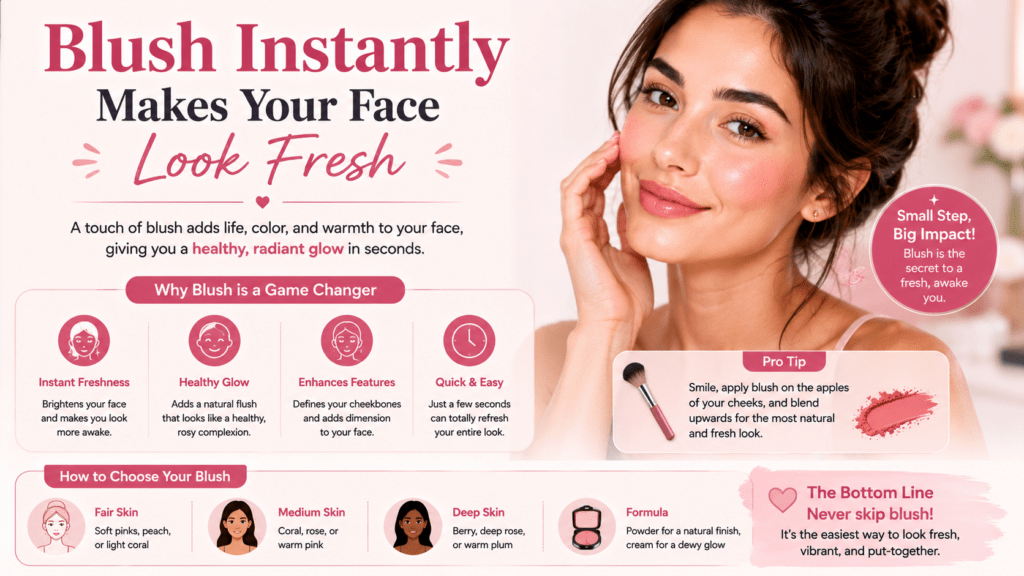
If you buy only a few color products, blush should be near the top of your list. Blush adds warmth and life to the face.
Beginners often find cream or liquid blush easy to blend because it creates a soft, natural finish. Powder blush can also work well, especially if your skin becomes oily.
How to Choose Blush
Choose a color that looks natural on your skin. Soft pink, peach, rose, coral, and berry shades can all work depending on your skin tone.
Apply a small amount to the cheeks and blend upward.
Pro Tip: Start with less product. Blush can become intense quickly.
Bonus Trick: A small amount of cream blush can sometimes be tapped onto the lips for a coordinated look, but always check that the product is designed for use on the area.
5. Mascara Gives the Biggest Eye Change
Mascara is one of the easiest products for beginners. It can make the eyes look more awake without requiring advanced eyeliner skills.
A beginner usually needs one mascara rather than several. Choose a formula based on your goal: lengthening, volumizing, curling, or waterproof.
How to Apply Mascara
Start at the roots of the lashes and gently move the wand upward. Avoid applying too many layers because this can create clumps.
Common Mistake: Pumping the mascara wand repeatedly inside the tube. This can push air into the product and make it dry faster.
Reality Check: Waterproof mascara can last longer during heat, sweat, or tears, but it may require a more effective makeup remover.
The AAD also advises replacing old makeup because expired products can become contaminated and may contribute to irritation or eye infections.
6. Add One Simple Eyebrow Product
You do not need a complicated brow kit. Beginners can start with one eyebrow pencil, powder, or tinted brow gel.
The goal is not to completely change the shape of your eyebrows. Instead, fill small gaps and lightly define the natural shape.
Which Product Should You Choose?
| Product | Best For |
| Brow pencil | Filling gaps |
| Brow powder | Soft, natural definition |
| Brow gel | Holding hairs in place |
| Tinted brow gel | Color and hold |
Pro Makeup Artist Tip: Use short, light strokes instead of drawing one dark line.
Common Mistake: Choosing a brow color that looks much darker than your natural hair.
7. Choose an Easy Lip Product
A lip product can complete your entire makeup look. Beginners can choose from lip balm, lip tint, gloss, lipstick, or lip liner.
For everyday makeup, tinted lip balm and lip tint are usually easy to apply. They do not require perfect edges.
How to Choose Your First Lip Color
A soft nude, pink, rose, peach, or berry shade can be versatile. If you prefer a bold look, red lipstick can also become a beginner staple with practice.
Quick Tip: If your lips feel dry, apply a comfortable lip balm first.
Common Mistake: Buying a color only because it looks good in the packaging. Test how it looks with your natural skin tone and the makeup you usually wear.
8. Buy One Simple Eyeshadow Palette
You do not need a giant eyeshadow collection. A small palette with neutral shades can teach you the basics.
Look for colors such as:
- Light cream
- Soft brown
- Medium brown
- Deep brown
- One shimmer shade
Beginner Eyeshadow Method
- Apply a light shade over the lid.
- Add a medium brown to the crease.
- Use a deeper shade near the outer corner.
- Blend the edges.
Pro Tip: Blending matters more than using many colors.
Common Mistake: Using too much dark eyeshadow before learning how to blend it.
9. Setting Powder or Setting Spray?
You may not need both products immediately.
Setting powder can help reduce shine, especially on oily skin. Setting spray can help makeup look more blended and comfortable. If your makeup fades quickly, learning how to make makeup last all day can help you keep your look fresh for longer without frequent touch-ups.
| Product | Best For |
| Setting powder | Reducing shine |
| Setting spray | Finishing and refreshing makeup |
| Both | Long-wear makeup routines |
For dry skin, too much powder can emphasize dryness. For oily skin, applying a small amount of powder to the T-zone may help.
Expert Advice: Use products where you need them instead of applying them heavily across the entire face.
10. Beginner Makeup Tools You Actually Need
You do not need a professional makeup artist’s entire kit.
Start with:
- One foundation brush or makeup sponge
- One blush brush
- One eyeshadow blending brush
- One small eyeshadow brush
- Eyelash curler, if desired
- Makeup remover or cleansing balm
A damp beauty sponge can create a soft finish, while brushes may provide more control.
Keep Your Tools Clean
Dirty brushes and sponges can collect makeup, oil, and bacteria. The AAD recommends regular cleaning of makeup tools and advises replacing old products when they show changes in smell, texture, color, or performance.
Common Mistake: Sharing mascara, eye makeup, or products that touch the skin directly.
Best Beginner Makeup Kit by Skin Type
Your skin type can help guide product selection.
| Skin Type | Look For | Be Careful With |
| Oily | Oil-free, lightweight, long-wear | Very heavy formulas |
| Dry | Hydrating, creamy, dewy | Excess powder |
| Combination | Balanced formulas | Too much product in the T-zone |
| Sensitive | Simple, gentle formulas | Fragrance and irritating ingredients |
| Acne-prone | Non-comedogenic products | Heavy pore-clogging formulas |
If a product causes itching, burning, redness, or repeated breakouts, stop using it. A 2025 systematic review of cosmetic and personal-care products found reported adverse effects including acne, redness, itching, and irritation, while fragrances, preservatives, and colorants were among ingredient categories associated with reactions in the reviewed studies.
Important: A product that works well for one person may not work well for another.
Budget vs Luxury Makeup for Beginners
You do not need expensive products to learn makeup.
A beginner can create a complete everyday look with affordable products. Spend more only when a product offers something important to you, such as better shade selection, a formula that suits your skin, or longer wear.
Budget Shopping Tips
- Buy one product at a time.
- Check the shade carefully.
- Avoid buying viral products you will not use.
- Choose multi-use products when appropriate.
- Focus on quality and suitability instead of brand name.
Luxury Alternative: A premium foundation or blush may offer a special texture or finish, but it will not automatically improve your technique.
Reality Check: Expensive makeup cannot replace good blending.
Easy Beginner Makeup Routine: Step by Step
For a simple everyday makeup look:
- Clean your face.
- Apply moisturizer.
- Apply sunscreen during the day.
- Use tinted moisturizer or foundation if desired.
- Apply concealer where needed.
- Add blush.
- Fill the brows lightly.
- Apply mascara.
- Add lip color.
- Use powder or setting spray if needed.
This routine works well for school, work, casual outings, or a simple daytime look.
A 5-Minute Version
If you are in a hurry, use:
- Concealer
- Cream blush
- Brow gel
- Mascara
- Lip tint
This creates a fresh look without requiring a full face of makeup.
Common Beginner Makeup Mistakes
Buying Too Many Products
A large collection can make learning more confusing. Start with a small kit.
Choosing the Wrong Foundation Shade
Always consider your face, neck, undertone, and natural lighting.
Applying Too Much Product
Thin layers usually look more natural and are easier to fix.
Skipping Skin Preparation
Dry or unprepared skin can affect how makeup looks.
Sleeping in Makeup
Makeup should be removed before bed. Cleveland Clinic advises people with acne-prone skin to avoid sleeping in makeup and choose non-comedogenic products.
Ignoring Product Expiration
Old makeup can change texture and collect germs. The AAD specifically warns that expired or spoiled makeup may contribute to irritation and other skin problems.
Common Makeup Myths Beginners Should Ignore
Myth: You Need a Full Makeup Collection
Truth: A few well-chosen products can create many looks.
Myth: Expensive Makeup Is Always Better
Truth: Product quality depends on formula, shade, skin compatibility, and application.
Myth: Foundation Must Cover Everything
Truth: Natural skin can still show through makeup.
Myth: More Powder Means Better Makeup
Truth: Too much powder can make makeup look dry or heavy.
Myth: Makeup Causes Acne for Everyone
Truth: Some products may contribute to breakouts for certain people, especially if they clog pores or irritate the skin. Choosing non-comedogenic products and removing makeup properly can help reduce risk.
Professional Makeup Artist Tips for Beginners
Pro Tip: Always start with less product.
Expert Advice: Blend each product before adding more.
Quick Tip: Natural daylight helps you see your real makeup shade.
Bonus Trick: If your foundation looks too heavy, use a damp sponge to soften the finish.
Common Mistake: Applying every product in the same amount across the entire face.
Advanced Tip: Learn where your face naturally has shadows and highlights before buying contour and highlighter. Once you’re comfortable with the basics, you can move on to a full glam makeup tutorial for beginners to learn more advanced techniques step by step.
Seasonal Makeup Advice
Summer
Choose lightweight formulas and use products that suit heat and humidity. A setting product can help if makeup moves during the day.
Winter
Dry weather may make skin feel tight. Use suitable moisturizer and avoid applying excessive powder.
Spring
This is a good time to check old products and clean brushes.
Autumn
Creamy blush and warm neutral colors can create a soft seasonal look.
Remember: Your skin may change with weather, so your makeup routine may need small adjustments. Healthy skin starts with more than facial skincare, and following a consistent body care routine for glowing smooth skin can help maintain an overall fresh and radiant appearance.
Beginner Makeup Shopping Checklist
Essential Products
☐ Moisturizer
☐ Sunscreen
☐ Tinted moisturizer or foundation
☐ Concealer
☐ Blush
☐ Mascara
☐ Brow product
☐ Lip product
Optional Products
☐ Eyeshadow palette
☐ Setting powder
☐ Setting spray
☐ Eyelash curler
☐ Makeup sponge
☐ Makeup brushes
Skin Safety
☐ Check the ingredients
☐ Test new products if your skin is sensitive
☐ Clean your brushes
☐ Do not share eye makeup
☐ Replace old makeup
☐ Remove makeup before bed
Dermatologists recommend testing new skincare products on small areas before full use when irritation is a concern. The AAD suggests repeated testing on small areas for several days to help identify possible reactions.
Frequently Asked Questions
1. What makeup products should a beginner buy first?
Start with moisturizer, sunscreen, a light foundation or skin tint, concealer, blush, mascara, an eyebrow product, and a lip product. You can add eyeshadow and setting products later.
2. What is the easiest makeup routine for beginners?
Apply moisturizer and sunscreen first. Then use a light base, concealer, blush, mascara, brow product, and lip color. This simple routine creates a fresh everyday look.
3. Is expensive makeup better for beginners?
Not always. Affordable makeup can work very well. Focus on the product’s formula, shade, skin type, and quality instead of choosing products only because they are expensive.
4. What makeup is best for oily or acne-prone skin?
Look for lightweight, oil-free, and non-comedogenic products. Always remove makeup before bed and clean your makeup brushes regularly to help reduce irritation and clogged pores.
5. How can beginners make makeup look natural?
Use small amounts of product and build coverage slowly. Blend everything well, choose shades close to your natural skin tone, and avoid applying too much powder or foundation.