


Have you ever applied your foundation, looked in the mirror, and thought, “Why does my foundation look patchy?”
You are not alone.
Many people experience foundation that looks uneven, flaky, cakey, dry, or separated after application. Sometimes the makeup looks perfect for the first few minutes, but then it starts breaking apart around the nose, mouth, cheeks, or forehead. Other times, the foundation refuses to blend and seems to sit on top of the skin.
The good news is that patchy foundation usually has a reason.
Your skin may be too dry. Your skincare products may not have absorbed properly. Your foundation and primer may not work well together. You may be using too much product, the wrong application tool, or an unsuitable formula for your skin type.
The solution is not always buying a new foundation.
In many cases, the real fix starts with better skin preparation and a lighter application technique. A professional makeup artist often focuses on the condition of the skin first because makeup cannot completely hide every texture problem.
For example, someone with dry skin may apply a full-coverage matte foundation and wonder why it clings to flaky areas. Someone with oily skin may use a thick moisturizer, a hydrating primer, and a dewy foundation together, then wonder why the base separates.
So, why foundation looks patchy depends on several factors.
In this guide, you will learn the most common causes of patchy foundation and exactly how to fix them. We will also cover different skin types, skincare ingredients, application tools, seasonal changes, common mistakes, professional makeup artist tricks, budget-friendly solutions, and five important FAQs.
Why Does My Foundation Look Patchy?
The most common reasons foundation looks patchy include dry skin, too much product, poor skin preparation, an unsuitable formula, incompatible skincare and makeup products, and incorrect application.
Before you remove all your makeup and start again, look closely at the problem. Is your foundation flaky? Is it separating? Does it look darker in some areas? Does it disappear around your nose? Each problem can have a different cause.
Quick Diagnosis Table
| Problem | Possible Cause | Best Fix |
| Flaky foundation | Dry skin | Moisturize and use a hydrating base |
| Foundation separates | Oil or product incompatibility | Use compatible formulas |
| Cakey foundation | Too much product | Apply thin layers |
| Patchy around nose | Oil or texture | Use less product and set lightly |
| Foundation pills | Skincare layering | Allow products to absorb |
| Uneven coverage | Poor blending | Use a damp sponge or suitable brush |
Pro Tip: Do not immediately blame the foundation. Your skincare routine and application method may be the real problem.
1. Your Skin Is Too Dry
Dry skin is one of the biggest reasons foundation looks patchy. When the skin has flaky or rough areas, foundation can stick to those spots and make them more visible.
For example, imagine applying foundation to a dry cheek. The foundation may look smooth on one part of the face but cling to small flakes near the nose or mouth. Adding more foundation usually makes the problem worse.
How to Fix Dry Skin Before Foundation
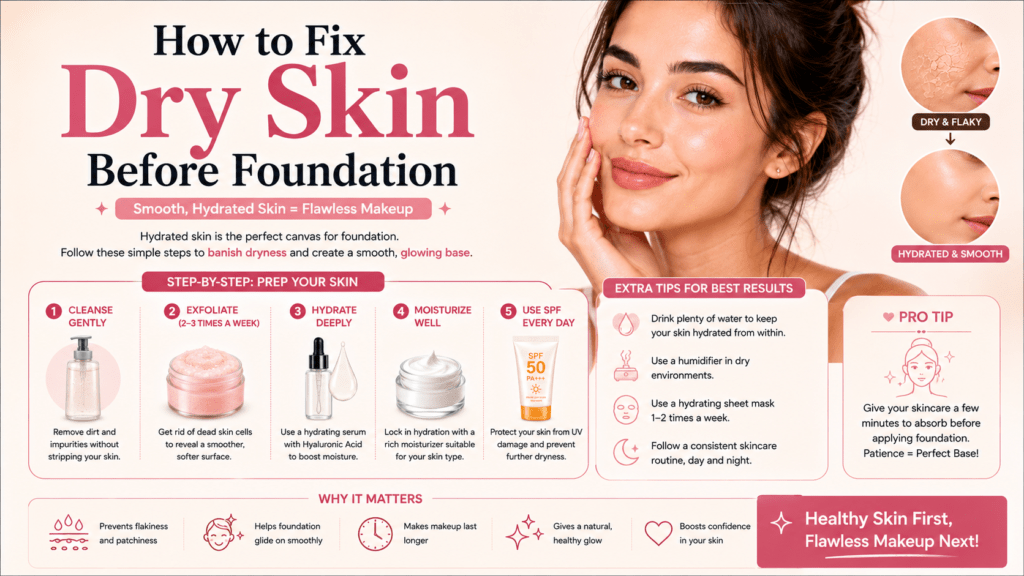
Start with a gentle cleanser and a suitable moisturizer. Avoid aggressively scrubbing your skin before makeup because harsh exfoliation can increase irritation.
Look for hydrating ingredients such as glycerin, hyaluronic acid, and ceramides. If your skin feels tight after cleansing, your routine may need more moisture.
Expert Advice: The AAD recommends gentle skin care and emphasizes choosing products suited to your skin’s needs. If your skin stays very dry, irritated, or inflamed, a dermatologist can help identify the cause.
Mini Conclusion: Smooth foundation starts with comfortable, well-prepared skin.
2. You Are Skipping Skin Preparation
Foundation does not always look good on completely unprepared skin. Makeup needs a smooth surface, but that does not mean you need ten skincare products.
A simple routine often works best:
- Cleanse gently.
- Apply moisturizer.
- Apply sunscreen during the day.
- Allow skincare to absorb.
- Apply primer only if you need it.
- Apply foundation in thin layers.
Real-Life Example
A person may apply foundation immediately after washing the face. The skin feels tight, so the foundation catches on dry areas. After adding moisturizer and waiting a few minutes, the same foundation may look much smoother.
Quick Tip: Give skincare time to settle before makeup. If your face still feels very wet or slippery, you may be applying too many layers.
Common Mistake: Applying a thick moisturizer and immediately covering it with a heavy foundation.
3. Your Skincare and Makeup Do Not Work Together
Sometimes your foundation looks patchy because the products underneath do not layer well together.
Some skincare and makeup formulas may pill or roll when layered. This can happen when products have different textures or when you rub the skin too much during application.
How to Prevent Pilling
Use fewer layers before makeup. Apply each product gently and allow it to settle.
You can also test your routine on your hand. Apply your skincare, primer, and foundation in the same order. If the products roll into little pieces, your combination may not be working well together.
Pro Tip: Do not aggressively rub foundation over skincare. Press and blend gently.
Reality Check: A popular skincare product may still be a poor match for your particular makeup routine.
4. You Are Using Too Much Foundation
More foundation does not always mean better coverage.
When you apply too much product, it can sit on top of the skin instead of becoming part of the makeup. This can create a thick, uneven, or cakey appearance.
The Thin-Layer Method
Apply a small amount of foundation to the center of the face first. Blend outward. Then check your coverage.
If you still need more, add a second thin layer only to areas that need it.
Professional Makeup Artist Trick: Use foundation where you need it most instead of automatically applying a thick layer everywhere.
Before: One heavy layer may look textured.
After: Two thin layers can look smoother and more natural.
5. Your Foundation Formula Does Not Suit Your Skin Type
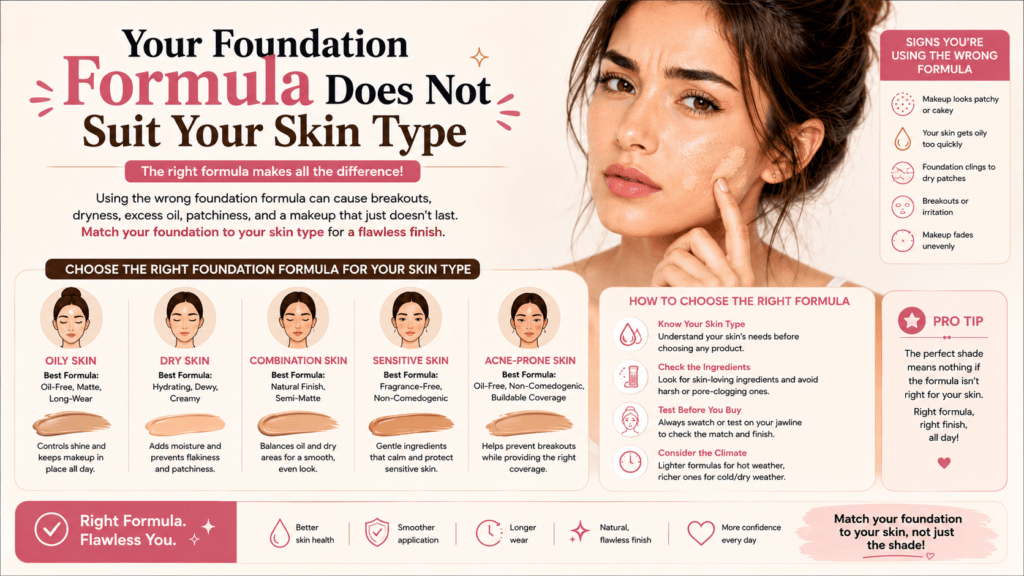
Your skin type plays a major role in how foundation looks.
A matte foundation may look beautiful on oily skin but emphasize dryness on dry skin. A rich, dewy foundation may look comfortable on dry skin but move quickly on oily skin.
Foundation Selection Guide
| Skin Type | Look For |
| Dry | Hydrating, natural, radiant finish |
| Oily | Lightweight, oil-control, long-wear |
| Combination | Balanced formula |
| Sensitive | Simple, gentle formulas |
| Acne-prone | Non-comedogenic options |
For people prone to clogged pores, Cleveland Clinic recommends oil-free, water-based, non-comedogenic makeup and advises removing makeup before bed.
Expert Advice: Choose your foundation based on your skin’s needs, not only on viral trends. If you’re unsure which formula is right for your skin type, this guide to choosing the best foundation for beginners can help you compare different foundation types and finishes.
6. Your Primer and Foundation Are Separating
If your foundation separates, slides, or looks uneven, your primer and foundation may not be working well together.
Some makeup artists prefer pairing products with similar base types. For example, certain silicone-heavy primers may behave differently from very water-based formulas.
This does not mean every product with a particular ingredient will fail together. However, if your makeup repeatedly separates after you layer two products, the combination deserves testing.
Try This Simple Test
Apply your moisturizer, primer, and foundation to a small area of your cheek or hand.
Wait a few minutes.
If the products separate, roll, or become uneven, try using fewer layers or a different combination.
Bonus Trick: Sometimes skipping primer gives a better result than adding another product.
7. You Are Using the Wrong Application Tool
The tool you use can change the final appearance of your foundation.
A brush can provide more coverage and control. A damp makeup sponge can create a softer, more blended finish.
Brush vs Sponge
| Tool | Best For |
| Foundation brush | More coverage |
| Damp sponge | Soft, natural finish |
| Fingers | Lightweight products and quick application |
A common beginner mistake involves dragging foundation aggressively across the face. Instead, use gentle pressing or controlled blending.
Pro Tip: A damp sponge should be moist, not soaking wet. Once you’ve perfected your base makeup, you can enhance your eye makeup with a natural no-makeup eye look that complements an everyday foundation.
Common Mistake: Using a dirty sponge or brush. Makeup tools can collect old product, oil, and dirt, which can affect application and skin health.
8. Your Skin Has Too Much Texture or Flaking
Foundation cannot completely erase natural skin texture. In fact, heavy makeup can sometimes make texture more noticeable.
If you have flaky skin, avoid harsh scrubbing right before makeup. Instead, build a consistent skincare routine.
For acne-prone skin, clogged pores and active breakouts can also affect how foundation sits.
Expert Advice: Cleveland Clinic recommends gentle cleansing, moisturizing, non-comedogenic products, and avoiding sleeping in makeup for people prone to comedonal acne.
Mini Conclusion: The best makeup finish often comes from improving your daily skin care rather than adding more foundation.
9. Oil Is Breaking Down Your Foundation
If your foundation looks patchy around your nose, forehead, or chin, excess oil may be breaking down the product.
This often happens during warm weather or after several hours of wear.
How to Fix Oily Foundation
- Use lightweight skincare.
- Avoid applying too much moisturizer.
- Choose a suitable foundation formula.
- Apply powder only where needed.
- Blot oil instead of repeatedly adding powder.
Quick Tip: Press blotting paper gently against oily areas. Do not rub your foundation away.
10. You Are Applying Powder Incorrectly
Powder can help makeup last longer, but too much powder can make foundation look dry, heavy, or uneven.
You do not always need to powder your entire face.
Better Powder Placement
Apply powder mainly to areas that become oily or where makeup tends to move.
For example:
- Forehead
- Nose
- Around the mouth
- Chin
People with dry skin may prefer very little powder.
Pro Makeup Artist Tip: Use a small amount and press it gently into the skin instead of rubbing it across the face.
How to Fix Patchy Foundation Step by Step
If your foundation already looks patchy, do not immediately apply more product.
Try this method:
Step 1: Identify the Problem
Is the area dry, oily, cakey, or separated?
Step 2: Remove Only the Problem Area
Use a damp cotton pad or clean sponge to gently remove the patchy section.
Step 3: Add a Tiny Amount of Moisturizer
If the area looks dry, apply a very small amount of moisturizer and wait.
Step 4: Reapply Thinly
Use a small amount of foundation and gently press it into the skin.
Step 5: Blend the Edges
Blend the repaired area into the surrounding makeup.
Step 6: Set Carefully
Use a small amount of powder only if needed.
Common Mistake: Adding more foundation directly over a patchy area. This usually creates more texture.
Morning vs Makeup Touch-Up Routine
| Morning Routine | Touch-Up Routine |
| Cleanse | Blot oil |
| Moisturize | Remove flaky patches if needed |
| Sunscreen | Add a tiny amount of moisturizer |
| Primer if needed | Reapply a thin layer |
| Foundation | Set only where needed |
Foundation Tips for Different Skin Types
Dry Skin
Use gentle cleansing and a hydrating moisturizer. Avoid applying heavy powder over dry areas.
Oily Skin
Choose lightweight products and use powder strategically. Blot oil before adding more makeup.
Combination Skin
Use different techniques on different areas. You may need more moisture on the cheeks and more oil control around the T-zone.
Sensitive Skin
Introduce new products slowly. If a product causes burning, itching, or repeated irritation, stop using it.
Acne-Prone Skin
Look for non-comedogenic options and remove makeup before bed. Avoid picking at active breakouts before applying makeup.
Budget-Friendly vs Luxury Solutions
You do not need expensive products to fix patchy foundation.
Budget Solutions
- Use your existing moisturizer correctly.
- Apply less foundation.
- Use a clean damp sponge.
- Avoid buying unnecessary products.
- Test product combinations before purchasing more.
Luxury Options
Premium foundations may offer advanced textures, larger shade ranges, or specialized finishes. However, a luxury product still needs proper preparation and application.
Reality Check: Good technique often makes a bigger difference than a higher price tag. As your makeup skills improve, you can build on these basics with a full glam makeup tutorial for beginners to create more polished looks for special occasions.
Seasonal Foundation Advice
Summer
Heat and humidity can increase oil and sweat. Use lightweight products and avoid heavy layers.
Winter
Cold, dry weather can make skin flaky. Focus on gentle cleansing and moisture.
Spring
Check your makeup tools and replace old products when necessary.
Autumn
Your skin may need a slightly richer moisturizer as the weather becomes drier.
Your skin can change with weather, hormones, environment, and skincare habits. Therefore, the same foundation routine may not work perfectly all year.
Foundation Do’s and Don’ts
Do
- Prepare your skin.
- Choose a suitable formula.
- Apply thin layers.
- Blend gently.
- Clean your tools.
- Remove makeup before bed.
- Test new products carefully.
If you’re planning to complete your look, choosing one of the best eyeshadow palettes for brown eyes can help create balanced eye makeup that pairs beautifully with a smooth foundation.
Don’t
- Apply foundation to very dry, flaky skin without preparation.
- Use too much product.
- Rub aggressively.
- Use dirty tools.
- Sleep in makeup.
- Ignore irritation.
- Choose a shade only from an online photo.
Ingredient and Product Selection Guide
| Product Type | Helpful For |
| Glycerin | Hydration |
| Hyaluronic acid | Moisture support |
| Ceramides | Skin barrier support |
| Lightweight oil-control formulas | Oily skin |
| Non-comedogenic makeup | Acne-prone skin |
| Cream formulas | Dry-looking skin |
| Powder formulas | Shine control |
Ingredients are not the only factor. The complete formula, your skin type, and your personal reaction all matter.
If you repeatedly experience burning, swelling, itching, or irritation after using cosmetics, stop using the suspected product and seek professional medical advice when needed.
Final Thoughts
Patchy foundation can be frustrating, but it does not always mean you need a new product.
Often, the solution is much simpler: prepare your skin, choose a formula that matches your skin type, apply less product, and blend gently.
Remember that real skin has texture, pores, fine lines, and natural variations. The goal of foundation is not to make your skin look like a completely smooth filter. The best makeup usually looks comfortable, balanced, and natural.
Build a healthy skincare routine, listen to your skin, and give your makeup technique time to improve.
Once you understand why foundation looks patchy, fixing it becomes much easier.
Start with better preparation, use less product, and remember: smooth makeup begins with healthy, well-cared-for skin.
Frequently Asked Questions
1. Why does my foundation look patchy even after moisturizing?
Your moisturizer may not suit your skin, or you may apply foundation before it absorbs. Wait a few minutes after moisturizing and use a thin layer of foundation.
2. How do I fix patchy foundation without removing all my makeup?
Blot oily areas and gently remove only dry, patchy spots. Apply a little moisturizer, wait, and reapply a thin layer of foundation with a clean sponge.
3. Why does my foundation separate around my nose?
Excess oil, too much product, or an unsuitable formula can cause separation. Use lightweight skincare, apply less foundation, and set the area lightly with powder.
4. Why does my foundation look cakey and flaky?
Dry skin, heavy foundation, and too much powder can cause a cakey finish. Prepare your skin well and apply thin layers of a formula suited to your skin type.
5. Is primer necessary to stop foundation from looking patchy?
No. Primer is optional. A good moisturizer, suitable foundation, and proper application may be enough for a smooth finish.