

If you have ever watched a makeup tutorial, you have probably seen someone apply primer before foundation. But do you really need it?
Is primer necessary before makeup, or is it just another product beauty brands want you to buy?
The answer is simple: primer is helpful for some people, but it is not essential for everyone.
A good primer can help with specific makeup concerns. It may smooth the look of pores, reduce shine, add hydration, improve makeup wear, or create a better surface for foundation. However, many people can achieve a beautiful makeup look with only clean skin, moisturizer, sunscreen, and foundation.
For example, someone with oily skin may enjoy a mattifying primer because makeup tends to move around the T-zone. On the other hand, someone with dry skin may prefer a hydrating moisturizer instead of adding another product.
The right choice depends on your skin type, your makeup routine, your foundation, and the result you want.
A professional makeup artist does not use primer automatically on every person. Instead, they look at the skin and ask: What does this makeup need?
Does the skin look dry? Add hydration.
Does the T-zone become oily? Use a mattifying product only where needed.
Are pores visible? Try a smoothing primer.
Does makeup already look good without primer? Skip it.
In this guide, we will explain when primer is useful, when you can skip it, how it differs from moisturizer, how to choose one for your skin type, and how to apply it correctly.
What Is Makeup Primer?
Makeup primer is a product applied before foundation and other makeup. Its purpose is to prepare the skin for makeup and help address specific concerns.
Different primers do different jobs. Some help control oil, while others add hydration. Some create a smoother appearance, and others help makeup last longer.
Common Primer Benefits
- Creates a smoother makeup base
- Helps reduce excess shine
- Adds hydration
- Helps foundation apply more evenly
- Can improve makeup wear
- May blur the appearance of pores temporarily
Real-Life Example: If your foundation disappears around your nose after a few hours, a suitable primer may help. However, if your foundation looks flaky because your skin is dry, a hydrating skincare routine may be more useful.
Mini Conclusion: Primer is a problem-solving product, not a mandatory step for everyone.
Is Primer Necessary Before Makeup?
No, primer is not necessary before makeup for everyone.
You can create a beautiful makeup look without primer if your skincare routine already gives you a smooth and comfortable base.
A simple routine may include:
- Cleanser
- Moisturizer
- Sunscreen during the day
- Foundation or skin tint
Many people do not need an additional primer. However, primer can be useful when you have a specific concern that moisturizer alone does not solve.
When Primer Can Help
Primer may be useful if:
- Your makeup becomes oily quickly.
- Your foundation does not last.
- Your pores look more visible.
- Your skin needs extra hydration.
- Your makeup looks uneven over certain areas.
Reality Check: Adding more products does not automatically create better makeup. The best routine uses only what your skin actually needs.
What Does Primer Actually Do?
Primer can create a smoother surface between skincare and makeup. Depending on the formula, it may help foundation spread more evenly or stay in place longer.
However, primer cannot permanently change your skin texture. For example, a pore-blurring primer may make pores look less noticeable while you wear it, but it does not remove pores.
Different Primers Solve Different Problems
| Concern | Primer Type |
| Excess oil | Mattifying primer |
| Dryness | Hydrating primer |
| Visible pores | Smoothing or blurring primer |
| Dull skin | Radiance primer |
| Makeup movement | Long-wear primer |
Pro Tip: Apply primer only where you need it. You do not always need to cover your entire face.
Primer vs Moisturizer: What Is the Difference?
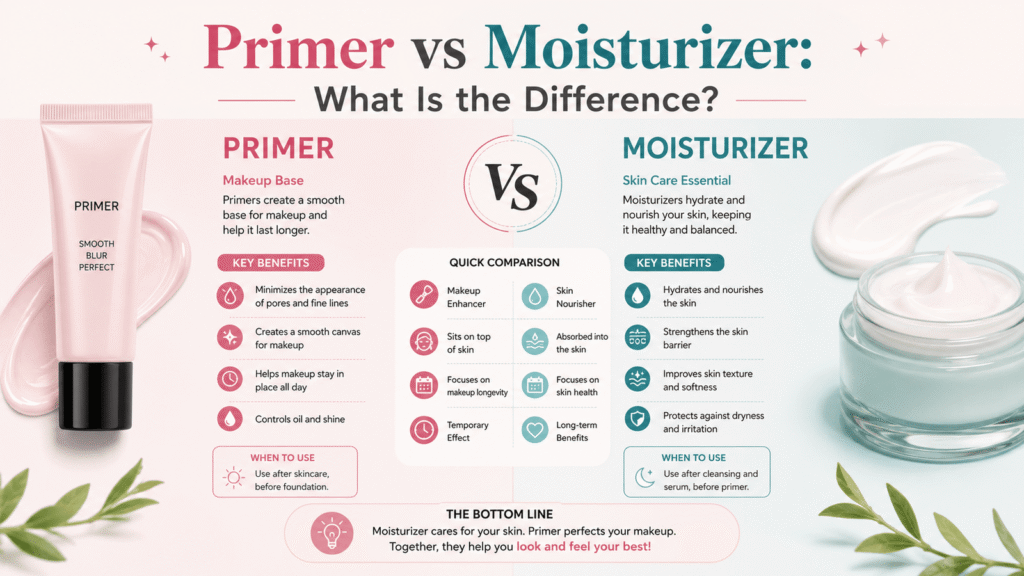
Moisturizer is a skincare product designed to support skin hydration and comfort. Primer is mainly a makeup-preparation product designed to improve how makeup looks or wears.
This means primer should not automatically replace moisturizer.
For example, dry skin may need moisturizer first. After that, you can apply a hydrating primer if you want additional makeup benefits.
Simple Comparison
| Moisturizer | Primer |
| Supports skin hydration | Prepares skin for makeup |
| Skincare step | Makeup step |
| Used regularly | Used when needed |
| Helps skin feel comfortable | Helps makeup apply or wear better |
Expert Advice: The American Academy of Dermatology recommends choosing skincare products based on your skin type and concerns. If your skin is irritated or unusually dry, improving your skincare routine may be more helpful than adding more makeup products. Before deciding whether you need primer, it’s worth following the best skincare routine before applying makeup because healthy, well-prepared skin often creates a smoother foundation base with fewer products.
Do You Need Primer for Your Skin Type?
Oily Skin
Primer can be useful for oily skin, especially around the forehead, nose, and chin.
A lightweight mattifying primer may help reduce shine. However, applying too much can make the makeup look dry or heavy.
Pro Trick: Apply mattifying primer only to your T-zone instead of your entire face.
Dry Skin
Dry skin may benefit from a hydrating primer, but moisturizer remains important.
Look for comfortable formulas with hydrating ingredients such as glycerin or hyaluronic acid.
Common Mistake: Using a thick layer of primer on flaky skin and expecting it to remove texture.
Combination Skin
Combination skin often benefits from using different products on different areas.
For example, you might use a mattifying primer on the nose and a hydrating product on the cheeks.
Sensitive Skin
If your skin is sensitive, choose a simple formula and introduce new products carefully.
Stop using a product if it causes burning, itching, or repeated irritation.
Acne-Prone Skin
Look for non-comedogenic products when possible. Cleveland Clinic recommends non-comedogenic makeup for people who are prone to clogged pores and acne. (my.clevelandclinic.org)
Different Types of Makeup Primer
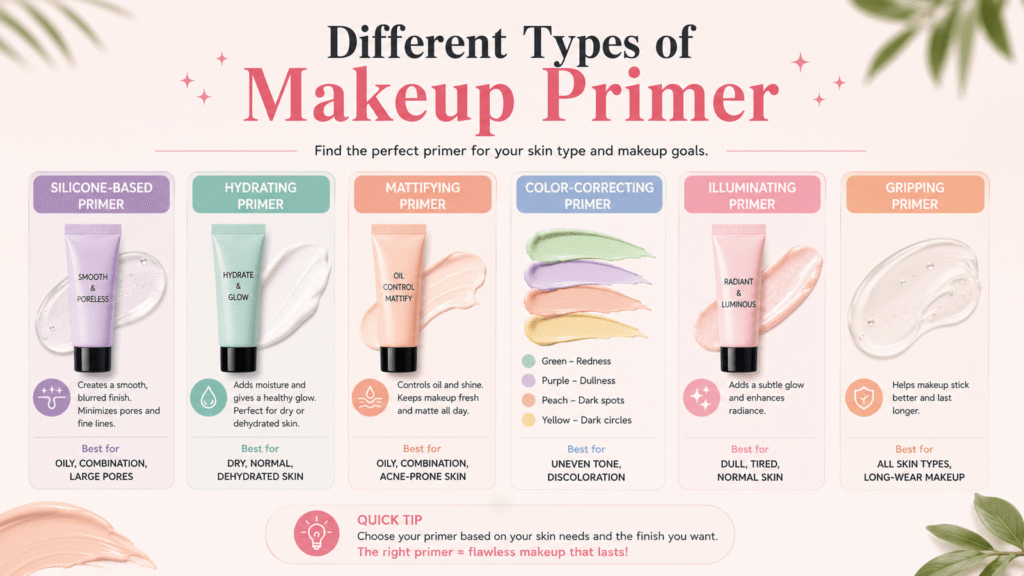
Hydrating Primer
Best for dry or dehydrated-looking skin.
It can help makeup look more comfortable and less dry.
Mattifying Primer
Best for oily skin and areas that become shiny.
Use a small amount because too much can create a heavy finish.
Pore-Blurring Primer
Designed to create a smoother-looking appearance over areas with visible pores.
Apply it gently instead of rubbing it repeatedly into the skin.
Illuminating Primer
Adds a radiant appearance under makeup.
It can be useful when your skin looks dull, but people with very oily skin may prefer using it only on selected areas.
Long-Wear Primer
Designed to help makeup stay in place for longer periods.
This may be useful for events, long workdays, or hot weather.
Quick Tip: Choose primer based on your actual makeup problem, not simply because it is popular online.
How to Apply Primer Correctly
Using too much primer can cause makeup to separate or feel heavy.
Follow these steps:
- Clean your face.
- Apply your skincare.
- Use sunscreen during the day.
- Allow your skincare to absorb.
- Apply a small amount of primer.
- Focus on areas that need it.
- Wait briefly if necessary.
- Apply foundation gently.
After priming your skin, choosing the right foundation shade for your skin tone is just as important for achieving a natural-looking makeup finish.
Professional Makeup Artist Tip: A pea-sized amount is often enough for the face, but the amount depends on the product and your skin.
Before and After Example
Before: Foundation may look uneven around the nose or move quickly across oily areas.
After: A suitable primer used in a thin layer may help create a more even makeup base.
Remember, the result depends on the entire routine, not just the primer.
Common Primer Mistakes
Using Too Much
Too much primer can cause foundation to slide or separate.
Solution: Start with a small amount.
Applying It Before Skincare Absorbs
This can create a slippery or uneven base.
Solution: Allow skincare to settle.
Using the Wrong Formula
A mattifying primer may feel uncomfortable on dry skin.
Solution: Match the primer to your skin type.
Applying One Primer Everywhere
Different areas of your face may have different needs.
Solution: Try targeted application.
Rubbing Too Hard
Aggressive rubbing can disturb skincare and create pilling.
Solution: Press or gently smooth the product.
When Can You Skip Primer?
You can skip primer when:
- Your foundation already applies smoothly.
- Your makeup lasts well.
- Your skin feels comfortable.
- Your moisturizer creates a good base.
- You do not have a specific concern to solve.
For a quick everyday makeup routine, skipping primer can save time and reduce the number of products on your skin.
A Simple No-Primer Routine
- Cleanse gently.
- Moisturize.
- Apply sunscreen in the daytime.
- Allow skincare to settle.
- Apply foundation or skin tint.
Reality Check: Sometimes fewer products create a better makeup finish. If your goal is longer-lasting makeup rather than adding more products, these practical tips on how to make makeup last all day can help improve wear without relying only on primer.
Primer Myths You Should Ignore
Myth: Everyone Needs Primer
Truth: Many people can apply makeup successfully without it.
Myth: Primer Fixes Every Skin Problem
Truth: Primer cannot replace skincare or treat skin conditions.
Myth: More Primer Means Longer-Lasting Makeup
Truth: Too much product may cause makeup to move or separate.
Myth: Primer Is Always Better Than Moisturizer
Truth: They serve different purposes.
Myth: Expensive Primer Always Works Better
Truth: A product should suit your skin and makeup routine, regardless of price.
Budget and Luxury Primer Tips
You do not need an expensive primer to achieve good makeup.
Budget Tips
- Buy a small size first.
- Choose products based on your skin concern.
- Avoid buying multiple primers at once.
- Use primer only where needed.
- Test the product with your foundation.
Luxury Alternatives
Premium primers may offer unique textures, specialized finishes, or luxury packaging. However, they still need to work with your skin and foundation.
Pro Tip: A suitable moisturizer and good foundation application can sometimes create a better result than an expensive primer. If you’re just starting to build your makeup collection, this guide to makeup products every beginner should buy first can help you choose the essentials without overspending.
Seasonal Primer Advice
Summer
Oily skin may benefit from a lightweight mattifying primer on the T-zone.
Winter
Dry skin may prefer more hydration and less powder.
Humid Weather
Use lightweight layers to avoid a heavy or slippery makeup base.
Cold Weather
Focus on a comfortable skincare routine before makeup.
Your skin can change with weather, so your primer needs may change too.
Primer Ingredient Guide
| Ingredient | Common Benefit |
| Glycerin | Helps attract moisture |
| Hyaluronic acid | Hydration support |
| Niacinamide | Often used in skin-care formulas |
| Silicones | Smooth-feeling texture |
| Lightweight emollients | Comfort and softness |
Ingredient names alone do not tell the whole story. The complete formula and your skin’s response matter.
If a product causes ongoing irritation, stop using it and seek professional advice when needed.
Makeup Routine Comparison
| Routine | Best For |
| Skincare + Foundation | Simple everyday makeup |
| Skincare + Primer + Foundation | Specific makeup concerns |
| Moisturizer + Primer + Foundation | Extra preparation |
| Targeted Primer + Foundation | Combination skin |
Professional Makeup Artist Tips
Pro Tip: Use primer strategically instead of applying it automatically.
Expert Advice: Test your primer with your actual foundation.
Quick Tip: If makeup pills, try fewer skincare layers.
Bonus Trick: Use different primers on different areas of your face.
Common Mistake: Applying a thick layer of primer because you think more will make makeup last longer.
Advanced Tip: For special events, test your complete skincare, primer, foundation, and setting routine before the actual day.
Did You Know?
The beauty industry continues to grow, with McKinsey estimating that the global beauty market could reach approximately $590 billion by 2030. As beauty brands create more products, shoppers now have many different primer types and formulas to choose from. (mckinsey.com)
More choices can be useful, but they can also make shopping confusing. You do not need every type of primer. Start with the problem you want to solve.
Primer Do’s and Don’ts
Do
- Choose primer for your skin concern.
- Apply a thin layer.
- Let skincare settle.
- Test it with your foundation.
- Use targeted application.
- Remove makeup properly at night.
Don’t
- Use primer automatically.
- Apply too much.
- Replace moisturizer with primer.
- Ignore skin irritation.
- Buy multiple products without testing them.
Final Thoughts
Primer can be a helpful part of your makeup routine, but it is not a mandatory step.
Before buying one, ask yourself: What problem am I trying to solve?
If your skin feels dry, focus on hydration. If your makeup becomes oily, try a lightweight mattifying product. If your pores look more visible, a smoothing primer may help.
Most importantly, do not forget the basics. Gentle cleansing, moisturizer, daily sun protection, and proper makeup removal all support healthier-looking skin.
You do not need ten products to create beautiful makeup. Find what your skin needs, use products thoughtfully, and build a routine that makes you feel confident and comfortable.
Frequently Asked Questions
1. Is primer necessary before makeup?
No. Primer is optional and depends on your skin type and makeup goals.
2. Can I wear makeup without primer?
Yes. Cleanse, moisturize, apply sunscreen during the day, and then apply makeup.
3. Should I use moisturizer or primer first?
Apply moisturizer first. Once it absorbs, apply primer if needed. Sunscreen goes before makeup.
4. What type of primer is best for oily skin?
A lightweight mattifying primer can help control shine, especially in oily areas.
5. Can primer cause breakouts?
Some primers may irritate or clog pores. Choose non-comedogenic products and remove makeup properly.