

Standing in front of a brush set with 12 different shapes can feel overwhelming, especially when you’re not sure which one actually does what. I’ve personally tested more than 15 makeup brushes over the years, from budget local sets to high-end imported ones, and the truth is: once you understand each brush’s job, applying makeup becomes so much easier. This guide breaks down every brush type, its use, and how to choose the right ones for your kit — and once you’ve got the right brushes, pair them with one of these best drugstore eyeshadow palettes under $20 for a complete look.
What Are Makeup Brushes and Why Do They Matter?
Makeup brushes are tools designed to pick up, blend, and apply product evenly, giving a smoother finish than using fingers alone. Fingers warm up cream products and can push bacteria into your skin, while the right brush distributes product precisely where you want it. Using the correct brush for each step is often the real difference between “good” makeup and “flawless” makeup.
How Many Types of Makeup Brushes Are There? (Complete Overview)

Direct answer: There are typically 10 to 15 core makeup brushes used in a complete routine, covering face, eyes, and precision work. Most beginners only need 5–6 of these to start, while professional makeup artists carry the full range for versatility on different clients and skin types.
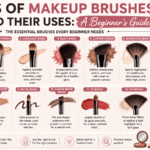
10 Different Types of Makeup Brushes and Their Uses
| Brush Type | Main Use |
|---|---|
| Foundation brush | Applies liquid or cream foundation evenly |
| Kabuki brush | Buffs powder or mineral foundation into skin |
| Powder brush | Sets makeup with loose or pressed powder |
| Blush brush | Applies blush precisely on cheeks |
| Contour brush | Sculpts and defines face shape |
| Concealer brush | Covers spots and under-eye area precisely |
| Eyeshadow brush | Applies color across the eyelid |
| Blending brush | Softens harsh eyeshadow lines |
| Angled brush | Fills brows or applies eyeliner |
| Fan brush | Sweeps away excess powder or applies highlighter |
Foundation Brushes: Which Type Is Best for Liquid Foundation?
For liquid foundation, a flat-top or slightly rounded synthetic brush works best because it doesn’t absorb too much product and gives buildable, streak-free coverage. Should you apply liquid foundation with a brush? Yes — a brush gives more control and a more natural, airbrushed finish compared to fingers, especially for oily or combination skin common in Pakistan’s climate.
Powder and Kabuki Brushes: What Are They Used For?
A kabuki brush is a short, dense, flat-topped brush used to buff loose or pressed powder into the skin for a smooth, matte finish. It’s especially popular for loose powder foundation because its dense bristles pack product evenly without leaving streaks. Regular powder brushes are fluffier and better for a light setting-powder dusting.
Best Brushes for Blush, Bronzer and Contour
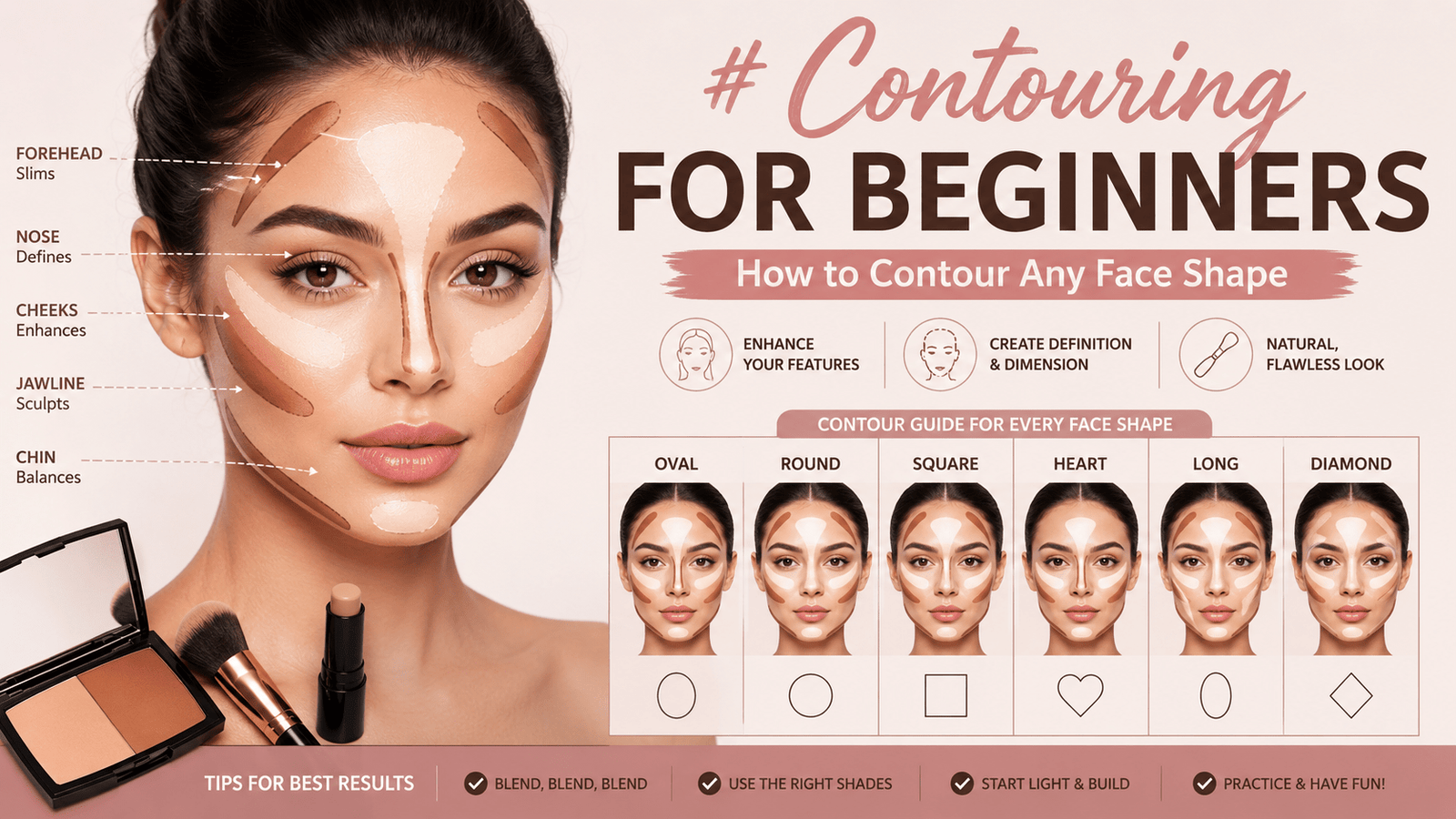
Which brush is best for blush? A medium, slightly rounded fluffy brush gives soft, blended color on the apples of your cheeks. Contour brushes are usually angled and denser, allowing precise placement along the cheekbones and jawline. Using the same brush for both often causes muddy, overlapping color, so keeping them separate gives a cleaner result. For a full breakdown of technique, check out this guide on contouring for beginners: how to contour any face shape.
Concealer and Under-Eye Brushes Explained
A concealer brush is typically small, flat, and firm, allowing precise application under the eyes and over blemishes without disturbing the foundation beneath. Its compact size helps blend concealer into tight areas like the inner corners of the eyes, something a bigger brush simply can’t do accurately.
Eye Makeup Brushes: Blending, Smudging and Mascara
Eyeshadow brushes come in different shapes: a flat brush packs color on the lid, a blending brush softens edges in the crease, and a smudger brush is great for a smoky effect. As for mascara, most people don’t realize a spoolie brush (the small mascara-like wand) is actually meant to separate lashes and remove clumps after applying mascara, not to apply it directly. The right brush technique also pairs well with these 10 makeup tricks to make your eyes look bigger.
Basic Makeup Brushes Every Beginner Needs (Starter Kit Guide)

If you’re just starting out, you don’t need all 10–15 brushes. A simple starter kit includes:
- Foundation or buffing brush
- Powder brush
- Blush brush
- Concealer brush
- Eyeshadow brush
- Blending brush
These six cover almost every basic look and are a smart, budget-friendly place to begin before investing in a full professional set. Once your base makeup is sorted, you might also want to learn how to curl your hair with a flat iron to complete your look.
How to Choose the Right Face Brush (Buying Guide)
When choosing a face brush, check the bristle density (denser bristles work better for full coverage), the handle length for comfortable control, and whether the bristles are synthetic (better for liquid and cream products) or natural hair (better for powder products). Always look for soft, non-shedding bristles, since scratchy or falling bristles are a sign of poor quality.
High-Quality vs Cheap Makeup Brushes: Do They Really Make a Difference?
Yes, quality does matter, but it doesn’t always mean expensive. A high-quality makeup brush holds its shape, doesn’t shed bristles, and blends product smoothly without streaking. You can tell a brush is high quality by gently tugging the bristles (they shouldn’t fall out), checking for a snug, well-glued ferrule, and testing how softly it feels against your skin.
| Feature | High-Quality Brush | Low-Quality Brush |
|---|---|---|
| Bristle shedding | Rare | Frequent |
| Blending finish | Smooth, seamless | Streaky, patchy |
| Handle durability | Sturdy, doesn’t loosen | Wobbly over time |
| Price range | Mid to high | Very low |
Best Makeup Brush Brands: Budget to Professional Picks
For beginners in Pakistan, affordable local options like Sonia G, Amelia Q, and sets available at local beauty markets offer good starter quality without a big investment. For those wanting professional-level tools, imported brands like Real Techniques, Morphe, and Sigma are widely trusted by makeup artists worldwide for their durability and blending performance. The best brand ultimately depends on your budget and how often you use makeup. Once your face makeup is complete, finish the look with this step-by-step ombre lips tutorial.
Frequently Asked Questions