
What Makes Makeup Fade During the Day?
Makeup fades because your skin is constantly changing throughout the day.
Your face produces oil. Your body produces heat. You touch your face. You sweat. Your skin moves when you smile, talk, eat, and make facial expressions. All of these things can slowly break down makeup.
The environment also matters. Heat, humidity, wind, air conditioning, and pollution can affect how makeup looks. For example, a person wearing makeup in a cool office may experience a completely different result from someone wearing the same makeup outside in hot weather.
Professional makeup artists understand this. They do not use the same routine for every person.
A bride, office worker, student, and festival guest may all need different makeup techniques.
Real-Life Example
Imagine two people using the same foundation.
Person A applies heavy moisturizer, a thick primer, a large amount of foundation, cream blush, cream bronzer, and several layers of powder.
Person B applies a lightweight moisturizer, waits for it to absorb, uses a small amount of primer, applies foundation in thin layers, and sets only areas that need it.
Even if they use the same foundation, Person B may experience better wear because the makeup has fewer heavy layers competing on the skin.
Pro Tip: More makeup does not always mean longer-lasting makeup.
Mini Conclusion: Long-lasting makeup depends on skin preparation, product compatibility, thin layers, and smart setting techniques.
Start With Clean, Balanced Skin
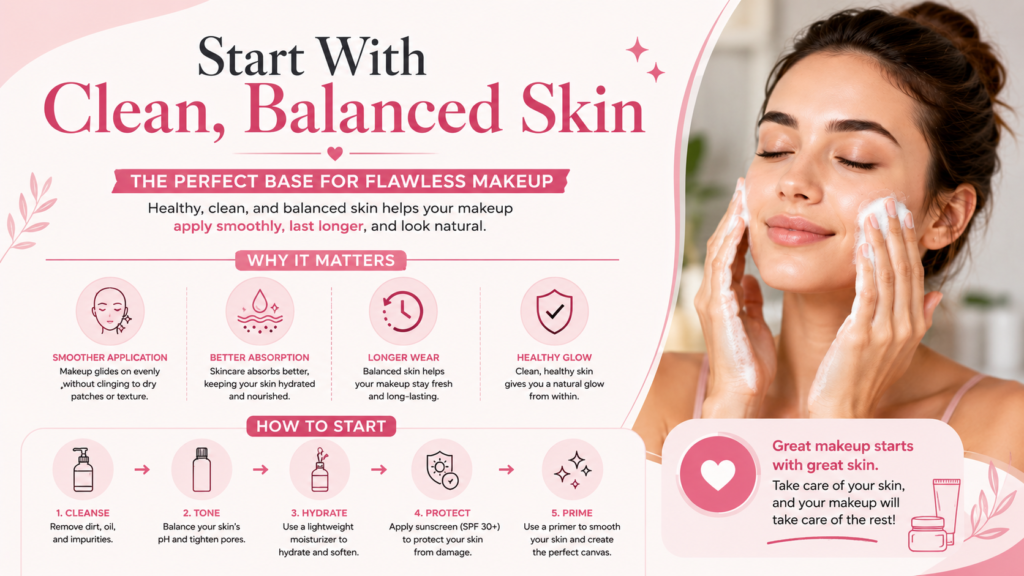
Before applying makeup, begin with clean skin.
You do not need to scrub your face aggressively. In fact, harsh scrubbing can irritate the skin and may make makeup look worse. Instead, use a gentle cleanser that removes excess oil, sweat, and leftover skincare without leaving your skin feeling tight.
If your skin feels extremely dry and uncomfortable after cleansing, your cleanser may be too harsh for you.
If your skin becomes oily immediately after cleansing, you may need to review your entire skincare routine rather than simply adding more powder.
The goal is balanced skin.
Professional Makeup Artist Trick
Use a clean, soft towel to gently pat your face dry. Do not rub your skin aggressively.
Then wait a few minutes before applying makeup if your skin feels very wet or slippery.
Common Mistake: Applying makeup immediately over a thick layer of skincare can cause foundation to slide or separate.
Quick Tip: Clean your makeup brushes and sponges regularly. Dirty tools can transfer oil, old product, and microorganisms onto the skin. The FDA notes that cosmetic products and applicators can become contaminated over time, which is one reason proper product hygiene matters. (U.S. Food and Drug Administration)
Mini Conclusion: Clean, calm, balanced skin creates a better base for long-lasting makeup. Following an anti-aging skincare routine can also improve your skin texture over time, creating an even better base for long-lasting makeup.
Moisturize According to Your Skin Type
Many people think moisturizer makes makeup disappear faster. That is not always true.
The right moisturizer can actually help makeup look smoother and more comfortable.
Dry skin often needs hydration before makeup. Without enough moisture, foundation may cling to dry patches and appear flaky.
Oily skin still needs hydration. Skipping moisturizer can leave the skin feeling uncomfortable and may encourage some people to overuse mattifying products.
The key is choosing the right texture.
| Skin Type | Better Moisturizer Texture |
| Oily | Lightweight gel or lotion |
| Dry | Cream or rich moisturizer |
| Combination | Lightweight moisturizer with extra hydration on dry areas |
| Sensitive | Fragrance-free, gentle formula |
| Normal | Lightweight lotion or cream |
Expert Advice
Apply a thin layer of moisturizer instead of covering your face with a heavy amount.
Then give it time to settle.
A professional makeup artist may wait several minutes before applying primer. This small step can make a big difference.
Reality Check: Healthy skin does not mean makeup will never fade. However, well-hydrated skin can help makeup sit more evenly.
Mini Conclusion: Moisturize your skin, but match the product to your skin type and avoid applying too much.
Use Sunscreen the Right Way
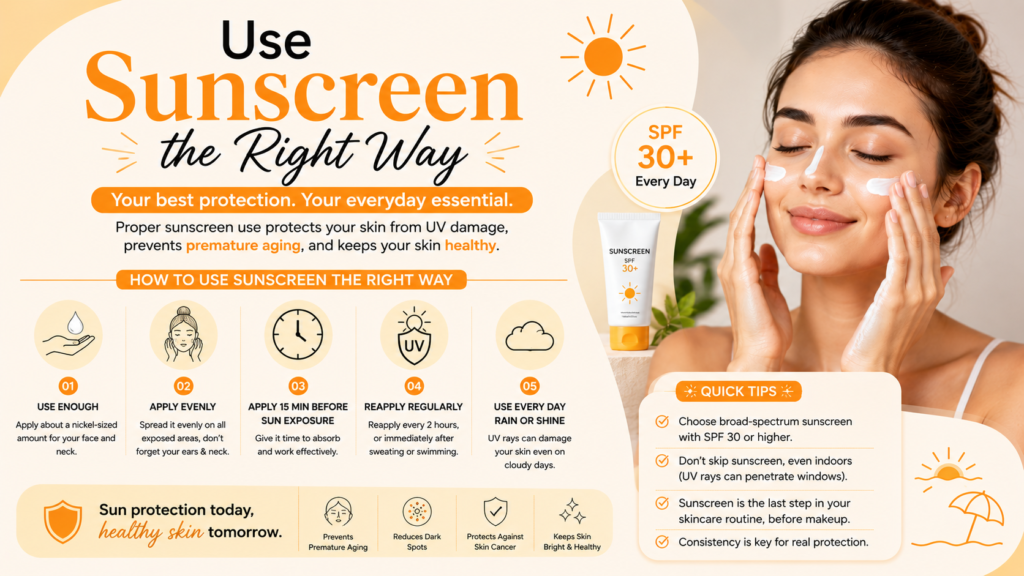
If you wear makeup during the day, sunscreen should remain part of your skincare routine.
However, sunscreen can sometimes affect makeup application. Some formulas feel greasy, pill under makeup, or leave a heavy layer.
The solution is not to skip sun protection. Instead, choose a sunscreen texture that works well with your skin and allow it to settle before applying makeup.
The FDA explains that products marketed with SPF claims can fall under both cosmetic and drug regulation in the United States, depending on their intended use. (U.S. Food and Drug Administration)
Professional Tip
If your sunscreen pills under makeup:
- Use less skincare underneath.
- Avoid rubbing repeatedly.
- Press products gently into the skin.
- Allow each layer to settle.
- Test product combinations before an important event.
Common Mistake: Assuming foundation with SPF always replaces dedicated sunscreen.
A foundation may not be applied in enough quantity to provide the level of protection expected from a properly tested sunscreen product.
Mini Conclusion: Protect your skin first, then create your makeup base. Adding a Vitamin C serum to your morning routine alongside sunscreen can help brighten your complexion and support healthier-looking skin.
Choose the Right Primer
Primer is not one-size-fits-all.
A primer can help create a smoother surface, improve the feel of makeup, and support longer wear. However, using the wrong primer may create the opposite result.
For example:
- Oily skin may prefer a lightweight mattifying primer in the T-zone.
- Dry skin may prefer a hydrating primer.
- Large-pore areas may benefit from a smoothing formula.
- Combination skin may need different primers on different areas.
Makeup Artist Technique
Do not automatically apply primer to your entire face.
Apply it where you need it most.
For example, you might use a smoothing primer around the nose and a hydrating primer on the cheeks.
This technique is called strategic priming.
Pro Tip: If your makeup separates around your nose, test your primer and foundation together. Sometimes the two formulas do not work well together.
Common Mistake: Applying a thick layer of primer.
More primer does not automatically mean better makeup wear.
Mini Conclusion: Use primer strategically, not automatically.
Apply Thin Layers of Foundation
One of the best ways to make foundation last longer is to apply less of it.
Heavy foundation can move, crease, separate, and become uncomfortable as the day continues.
Start with a thin layer.
Then add more only where you need extra coverage.
This method creates a more natural finish and can improve the way makeup wears.
Step-by-Step Foundation Method
- Apply a small amount of foundation.
- Start in the center of the face.
- Blend outward.
- Use a damp sponge or brush depending on your desired finish.
- Add a second thin layer only to areas that need more coverage.
- Allow the foundation to settle before adding powder.
Real-Life Example
If you have redness around your nose, you do not need heavy foundation across your entire face. Apply extra coverage only to the red areas.
This technique saves product and reduces the amount of makeup that can fade.
Pro Trick: Press the foundation into the skin instead of continuously dragging it around.
Mini Conclusion: Thin, controlled layers usually look better and last longer than one heavy layer.
How to Make Foundation Last Longer
If your foundation disappears by lunchtime, start by asking why.
Is your skin oily?
Is your foundation too emollient?
Are you touching your face?
Did you apply too much skincare underneath?
Are your primer and foundation compatible?
The answer can help you solve the problem.
| Problem | Possible Solution |
| Foundation becomes oily | Use targeted powder and oil-control primer |
| Foundation looks flaky | Improve hydration and use less powder |
| Foundation separates | Test skincare, primer, and foundation compatibility |
| Foundation fades around nose | Apply thin layers and set the area carefully |
| Foundation transfers | Use a long-wear formula and avoid touching the face |
| Foundation looks heavy | Use less product and blend in thin layers |
Expert Advice
Do not judge a foundation only by how it looks immediately after application.
Wear it for several hours.
Check:
- How does it look after four hours?
- Does it become more oily?
- Does it oxidize?
- Does it settle into lines?
- Does it separate around your nose?
A foundation that looks beautiful for 30 minutes may not be the best foundation for your lifestyle.
Mini Conclusion: The best foundation is the one that works with your skin and your daily environment.
Make Concealer Stay in Place
Concealer often creases because people apply too much product.
The under-eye area contains natural movement and fine lines. No concealer can completely stop the skin from moving.
However, you can reduce creasing.
Long-Lasting Concealer Method
- Apply a small amount of eye cream if needed.
- Allow it to absorb.
- Apply a thin amount of concealer.
- Blend carefully.
- Wait briefly.
- Remove excess product from creases.
- Set lightly with a small amount of powder.
Pro Tip: Use a small brush to apply powder precisely instead of covering the entire under-eye area with a thick layer.
Common Mistake: Baking heavily under the eyes when your skin is dry.
Heavy powder can make fine lines look more visible.
Mini Conclusion: Less concealer and precise setting often create a smoother, longer-lasting result.
Use Cream and Powder Products Together
One of the most useful professional techniques for long-lasting makeup is layering similar textures.
For example:
- Cream blush + powder blush
- Cream bronzer + powder bronzer
- Cream eyeshadow + powder eyeshadow
The cream product creates color and the powder layer can help reinforce it.
However, the key is moderation.
Applying too many layers can make makeup look thick.
Professional Makeup Artist Trick
Apply a cream product first.
Allow it to settle.
Then lightly apply a powder version over it.
This can help improve color longevity during long events.
Bonus Trick: If you want a soft, natural finish, use a small amount of powder only where you need extra durability.
Mini Conclusion: Strategic layering can improve makeup wear without creating a heavy appearance.
Set Makeup Without Making It Look Heavy
Powder is useful, but you do not need to powder every part of your face equally.
Your forehead, nose, and chin may need more powder than your cheeks.
This is especially useful for combination skin.
Powder Placement Guide
| Face Area | Suggested Approach |
| Forehead | Light setting |
| Nose | More targeted setting |
| Cheeks | Minimal powder if dry |
| Under eyes | Small amount |
| Chin | Light to moderate setting |
Common Mistake
Applying powder everywhere because you want makeup to last longer.
This can make dry areas look dull or textured.
Pro Tip: Use a pressing motion instead of aggressively sweeping powder across the face.
Mini Conclusion: Set strategically. Long-lasting makeup should still look like skin.
Use Setting Spray Correctly
Setting spray can help finish your makeup routine.
However, it is not magic.
It cannot repair a poorly prepared base or excessive foundation.
For better results:
- Hold the spray at the recommended distance.
- Close your eyes.
- Spray evenly.
- Allow the product to dry naturally.
- Avoid touching your face immediately.
Some people also use setting spray between makeup stages, but the best technique depends on the formula.
Professional Trick
If your makeup looks too powdery, setting spray can help soften the appearance.
Common Mistake: Spraying too much product until the face becomes wet.
More spray does not necessarily create longer wear.
Mini Conclusion: Use setting spray as the finishing step in a balanced makeup routine.
Make Eye Makeup Last All Day
Eye makeup often fades because of natural oils, blinking, watery eyes, and touching.
A good eye primer can help create a smoother base for eyeshadow.
For oily eyelids, a lightweight eye primer may help reduce movement.
For dry eyelids, avoid applying too much powder before eyeshadow.
Long-Wear Eye Makeup Tips
- Use an eye primer when needed.
- Apply eyeshadow in thin layers.
- Press shimmer onto the lid instead of aggressively sweeping.
- Choose long-wear eyeliner for humid conditions.
- Allow waterproof mascara to dry before applying additional layers.
- Avoid rubbing your eyes.
Pro Tip: If your eyeliner transfers to your upper eyelid, test whether the problem comes from eyelid oil or from the eyeliner formula.
Mini Conclusion: Eye makeup lasts longer when you control oil and avoid excessive product. If you’re new to eye makeup, try this easy smoky eye tutorial for beginners to create a look that lasts throughout the day.
Make Lipstick Last Longer
Lip color often fades because we eat, drink, talk, and touch our lips.
You can improve longevity with a simple layering technique.
Long-Lasting Lip Routine
- Apply a comfortable lip balm.
- Remove excess balm if necessary.
- Outline the lips with lip liner.
- Fill in the lips with the liner.
- Apply lipstick.
- Blot gently.
- Add another thin layer if needed.
Common Mistake: Applying a thick layer of lipstick and expecting it to last all day.
Thin layers often wear more evenly. For even better results, learn how to apply lipstick perfectly without bleeding before using long-wear lip products.
Quick Tip: Carry a small lip product for normal reapplication. Even the longest-lasting lipstick may need refreshing after meals.
Mini Conclusion: Long-lasting lip makeup depends on preparation, layering, and realistic expectations.
Long-Lasting Makeup for Oily Skin
Oily skin often causes makeup to fade faster around the forehead, nose, and chin.
However, using excessive powder can make the skin look cakey.
A better approach is targeted oil control.
Oily Skin Routine
- Use a gentle cleanser.
- Apply lightweight moisturizer.
- Use a targeted mattifying primer.
- Apply thin foundation layers.
- Set oily areas with powder.
- Use blotting papers during the day instead of adding endless powder.
Expert Advice: Blot oil first, then decide whether you need more powder.
If you apply powder directly over a thick layer of oil, the makeup may become heavy and uneven.
Mini Conclusion: Control oil strategically instead of trying to remove every natural shine.
Long-Lasting Makeup for Dry Skin
Dry skin needs a different strategy.
The goal is not to remove every bit of shine. The goal is to create a comfortable, flexible base.
Dry Skin Routine
- Use gentle cleansing.
- Apply moisturizer.
- Allow skincare to absorb.
- Choose a hydrating or natural-finish foundation.
- Avoid excessive powder.
- Use cream blush and bronzer when suitable.
- Set only areas that crease or move.
Common Mistake: Using heavy powder to force makeup to last.
This can make dry skin look rough.
Makeup for Combination Skin
Combination skin often needs different techniques on different areas.
Your T-zone may become oily while your cheeks remain normal or dry.
Therefore, using one identical product across the entire face may not give the best result.
Try This
- Lightweight hydration across the face.
- Mattifying primer only where needed.
- More powder on the T-zone.
- Less powder on dry cheeks.
- Flexible foundation with buildable coverage.
Pro Tip: Think of your face as different zones rather than one single surface.
Mini Conclusion: Combination skin benefits from customized application.
Makeup for Sensitive or Acne-Prone Skin
If your skin reacts easily, long-lasting makeup should never come at the cost of irritation.
Choose products carefully and pay attention to how your skin responds.
Avoid introducing several new products immediately before an important event.
Patch testing may be helpful for some products, although it cannot predict every possible reaction.
If you have persistent skin problems, consult a qualified dermatologist.
The FDA notes that cosmetic companies are responsible for the safety of their products and ingredients under applicable regulations, but consumers should still use products according to their labeling and pay attention to irritation or adverse reactions. (U.S. Food and Drug Administration)
Mini Conclusion: Comfortable skin is more important than perfect makeup.
Hot and Humid Weather Makeup Tips
Humidity can make makeup feel heavy and cause products to move.
For hot weather:
- Use lightweight skincare.
- Avoid excessive layers.
- Choose long-wear formulas.
- Use waterproof eye products when appropriate.
- Set strategic areas.
- Carry blotting papers.
- Avoid touching your face.
Before-and-After Scenario
Before: Heavy moisturizer, thick foundation, cream products, and excessive powder.
After: Lightweight skincare, thin foundation, targeted powder, and a controlled setting routine.
The second approach often feels more comfortable in heat.
Mini Conclusion: In hot weather, lightweight layers usually perform better than heavy coverage.
Cold and Dry Weather Makeup Tips
Cold weather can make skin feel dry and uncomfortable.
Your makeup routine may need more hydration.
Use a suitable moisturizer and avoid over-powdering.
If your skin becomes flaky, adding more foundation usually does not solve the problem.
Instead, improve the base.
Pro Tip: Test your makeup routine in the same type of weather where you plan to wear it.
Mini Conclusion: Seasonal changes may require seasonal adjustments to your makeup routine.
Common Mistakes That Make Makeup Fade
Mistake 1: Applying Too Much Skincare
Too many slippery layers can affect makeup adhesion.
Solution: Use a simple routine and allow products to settle.
Mistake 2: Applying Too Much Foundation
Heavy foundation can move and separate.
Solution: Build coverage slowly.
Mistake 3: Using Too Much Powder
Excess powder can make makeup look dry and cakey.
Solution: Powder strategically.
Mistake 4: Touching Your Face
Hands can transfer oil and remove makeup.
Solution: Avoid unnecessary touching.
Mistake 5: Ignoring Product Compatibility
Some skincare, primers, and foundations do not work well together.
Solution: Test combinations before important events.
Mistake 6: Using Old Makeup
Cosmetics can change over time. FDA explains that cosmetics may degrade and applicators can become exposed to microorganisms with repeated use and poor storage. (U.S. Food and Drug Administration)
Solution: Check product condition and follow manufacturer guidance.
Makeup Myths You Should Stop Believing
Myth: More Powder Always Means Longer Wear
Not necessarily. Too much powder can create texture and make makeup look heavy.
Myth: Oily Skin Should Skip Moisturizer
Incorrect. Oily skin still needs appropriate hydration.
Myth: Setting Spray Fixes Everything
Setting spray cannot replace proper skin preparation.
Myth: Waterproof Makeup Never Fades
Waterproof products can still fade from oil, rubbing, friction, and time.
Myth: Expensive Makeup Always Lasts Longer
Price does not guarantee performance.
Myth: You Need Full Coverage for Long Wear
Thin layers can often create better-looking, more comfortable results.
Budget-Friendly Long-Lasting Makeup Routine
You do not need a luxury makeup collection.
A simple routine can include:
- Gentle cleanser
- Suitable moisturizer
- Sunscreen
- Primer only where needed
- Foundation or skin tint
- Concealer
- Powder
- Blush
- Mascara
- Lip product
Budget Tip
Invest more in products that directly affect your skin comfort and daily wear.
You can often save money by choosing multipurpose products.
Reality Check: A well-applied affordable product can outperform an expensive product applied incorrectly. If you love radiant makeup, learning how to get dewy glass skin makeup can help you achieve a fresh, glowing finish without using excessive products.
Luxury Long-Wear Makeup Routine
Luxury products may offer elegant textures, advanced packaging, or specialized formulas.
However, the same basic principles still apply:
- Prepare the skin.
- Use thin layers.
- Match products to your skin.
- Set strategically.
- Avoid over-application.
Mini Conclusion: Technique remains more important than the price tag.
Morning vs Night Routine
| Morning | Night |
| Cleanse gently | Remove makeup completely |
| Moisturize | Cleanse thoroughly |
| Apply sunscreen | Apply suitable skincare |
| Apply makeup | Avoid sleeping in makeup |
| Set strategically | Clean brushes regularly |
Removing makeup at night is important because makeup should not remain on the skin indefinitely.
The American Academy of Dermatology Association regularly emphasizes gentle skin care and proper cleansing practices as part of maintaining healthy skin. For persistent irritation, acne, or other concerns, professional dermatology advice is appropriate.
Complete All-Day Makeup Checklist
Before Makeup
☐ Clean skin
☐ Suitable moisturizer
☐ Sunscreen
☐ Skincare absorbed
☐ Primer matched to skin needs
During Application
☐ Thin foundation layers
☐ Minimal concealer
☐ Cream and powder products layered carefully
☐ Strategic powder placement
☐ Setting spray applied evenly
During the Day
☐ Avoid touching your face
☐ Blot oil before adding powder
☐ Drink water
☐ Carry lip product if needed
At Night
☐ Remove makeup
☐ Cleanse gently
☐ Follow your skincare routine
☐ Clean makeup tools regularly
Frequently Asked Questions
1. How can I make my makeup last all day without touch-ups?
Start with clean, moisturized skin, use suitable products, apply thin layers, and set your makeup strategically. Avoid touching your face and blot oil before adding powder.
2. Why does my foundation disappear after a few hours?
Oil, sweat, touching your face, unsuitable skincare, or incompatible products can cause foundation to fade. Try thinner layers and products suited to your skin type.
3. How do I stop my makeup from melting in hot weather?
Use lightweight skincare, thin makeup layers, long-wear products, targeted powder, and setting spray. Blot excess oil instead of adding too much powder.
4. Should I use primer for long-lasting makeup?
Yes, if it suits your skin and makeup needs. Use mattifying primer on oily areas and hydrating primer on dry areas.
5. How do I make foundation last longer on oily skin?
Use lightweight skincare, an oil-control primer, thin foundation layers, and powder on oily areas. Blot oil before reapplying powder.