

Do you ever spend twenty minutes on your makeup, only to look in the mirror an hour later and see patchy, flaky spots peeking through? If you have dry skin, you already know this pain. Your foundation clings to dry patches. Your concealer creases under your eyes. Your skin looks dull instead of glowing, no matter how much product you apply.
You are not alone in this struggle. Dry skin affects people of all ages, and it becomes even more common during winter months or in places with low humidity. The good news? Makeup for dry skin does not have to be frustrating. With the right prep, the right products, and a few professional tricks, you can get a smooth, radiant, long-lasting look every single time. If your goal is a healthy, luminous finish, learning the secrets behind Dewy Glass Skin Makeup can help you build the perfect base before applying foundation.
This guide is written for beginners and beauty lovers who want real answers, not confusing beauty jargon. We will walk through everything, from skincare prep to setting your makeup so it lasts all day without looking cakey or flaky. You will learn what professional makeup artists do differently, what dermatologists recommend, and which common mistakes are secretly ruining your makeup application.
Think of your skin like a sponge. A dry sponge cracks and crumbles when you press on it. But a slightly damp sponge is soft, flexible, and holds its shape. Your skin works the same way. Before makeup ever touches your face, your skin needs moisture. Skip this step, and no amount of expensive foundation will save your look.
By the end of this article, you will know exactly how to prep your skin, which products to choose, how to apply them correctly, and how to keep your makeup looking fresh from morning until night. We will also cover budget-friendly options, luxury alternatives, seasonal adjustments, and answers to the most commonly asked questions about makeup for dry skin.
Let’s turn your dry, flaky makeup struggles into a smooth, dewy glow you will love.
1. Understanding Dry Skin: Why Makeup Looks Different on You
Dry skin happens when your skin does not produce enough natural oils, called sebum, to keep itself moisturized. This is different from dehydrated skin, which lacks water rather than oil, though many people experience both at once. Dry skin often feels tight, looks flaky, and can appear dull or rough to the touch, especially around the cheeks, forehead, and jawline.
Did You Know? According to the American Academy of Dermatology, dry skin is one of the most common skin concerns reported by patients, and it tends to worsen with age, cold weather, and frequent hot showers. This is why so many people notice their makeup behaving differently in winter compared to summer.
When your skin lacks moisture, its outer layer (called the skin barrier) does not lie flat. Instead, tiny flakes and rough patches form, which catch onto powder products and makeup brushes. This is why foundation can look patchy or emphasize texture instead of hiding it. Makeup was never designed to fix dryness; it simply sits on top of whatever condition your skin is already in. That means the real secret to flawless makeup for dry skin is treating the skin itself, not just covering it up.
Pro Tip: Think of your foundation as the last step of your skincare routine, not a separate beauty step. If your skin underneath is not properly hydrated, your makeup will always struggle to look its best, no matter how expensive the product is.
Many beginners assume that a fuller coverage foundation will “hide” dryness better. In reality, heavier formulas often make flakiness more visible because they cling to rough texture. Lighter, hydrating formulas tend to blend into the skin more smoothly, creating a natural, healthy-looking finish instead of a mask-like appearance.
Mini Conclusion: Understanding that dry skin needs moisture first and coverage second is the foundation (pun intended) for every tip in this guide.
2. The Skincare-First Rule: Prepping Your Skin Before Makeup
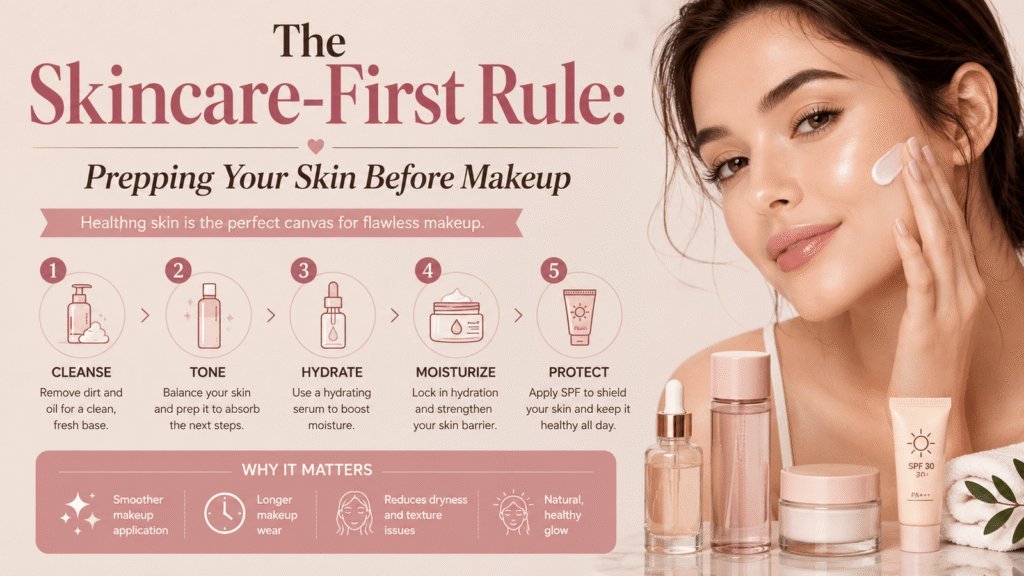
Professional makeup artists agree on one universal rule: great makeup starts with great skin prep. For dry skin, this means layering hydrating products in the right order before you even pick up a makeup brush. Skipping this step is the number one reason makeup looks cakey or flaky by midday.
Start with a gentle, hydrating cleanser that does not strip your skin’s natural oils. Follow this with a hydrating toner or essence, which helps add a layer of water back into the skin. Then apply a serum containing hyaluronic acid, a humectant that draws moisture into the skin like a magnet. Finish with a rich, ceramide-based moisturizer to seal everything in and repair your skin barrier.
| Skincare Step | Purpose | Best Ingredient to Look For |
| Cleanser | Removes dirt without stripping oils | Ceramides, glycerin |
| Toner/Essence | Adds a hydration layer | Rose water, hyaluronic acid |
| Serum | Draws in and holds moisture | Hyaluronic acid, niacinamide |
| Moisturizer | Seals in hydration | Ceramides, shea butter |
| Facial Oil (optional) | Extra nourishment for very dry skin | Squalane, jojoba oil |
Expert Advice: Dermatologists at the Cleveland Clinic often recommend waiting a few minutes after applying moisturizer before starting makeup. This allows the product to absorb properly instead of sitting on top of the skin, which can cause foundation to slide around or pill.
For very dry skin, consider adding a facial oil like squalane or jojoba oil as your final skincare step. These oils mimic your skin’s natural sebum and create a soft, supple surface for makeup to glide onto. Just remember that a little goes a long way; too much oil can make your foundation slip off your face faster.
Common Mistake: Applying makeup immediately after moisturizing is one of the biggest mistakes beginners make. Give your skin at least 3 to 5 minutes to fully absorb the product before moving on to primer or foundation.
Mini Conclusion: Your skincare routine is not separate from your makeup routine, it is the first and most important step of it.
3. Choosing the Right Primer for Dry Skin
Primer acts as the bridge between your skincare and your makeup. For dry skin, the goal is to choose a hydrating, dewy, or illuminating primer rather than a mattifying one. Mattifying primers are designed to absorb oil, which is the opposite of what dry skin needs.
Look for primers with words like “hydrating,” “glow,” “dewy,” or “radiance” on the label. Ingredients such as hyaluronic acid, glycerin, and vitamin E are excellent choices. These primers create a smooth, slightly luminous surface that helps foundation glide on evenly instead of catching on dry patches.
Quick Tip: Apply primer with clean fingertips instead of a brush. The warmth from your fingers helps the product melt into the skin more effectively, giving you better absorption and a smoother finish.
Some makeup artists also recommend “skipping” primer entirely on very dry days and instead using a slightly thicker moisturizer as the base layer. This is a professional trick that works well for people whose skin feels extremely tight or flaky, since it reduces the number of product layers that could cause pilling.
Reality Check: Not every dry skin type needs the exact same primer. Combination-dry skin (dry cheeks, slightly oily T-zone) may benefit from a hydrating primer only on the drier areas, while using a lightweight, pore-blurring primer on the T-zone.
Mini Conclusion: The right primer smooths and hydrates rather than mattifies, setting the stage for flawless foundation application.
4. Foundation Tips: Getting a Smooth, Hydrated Base
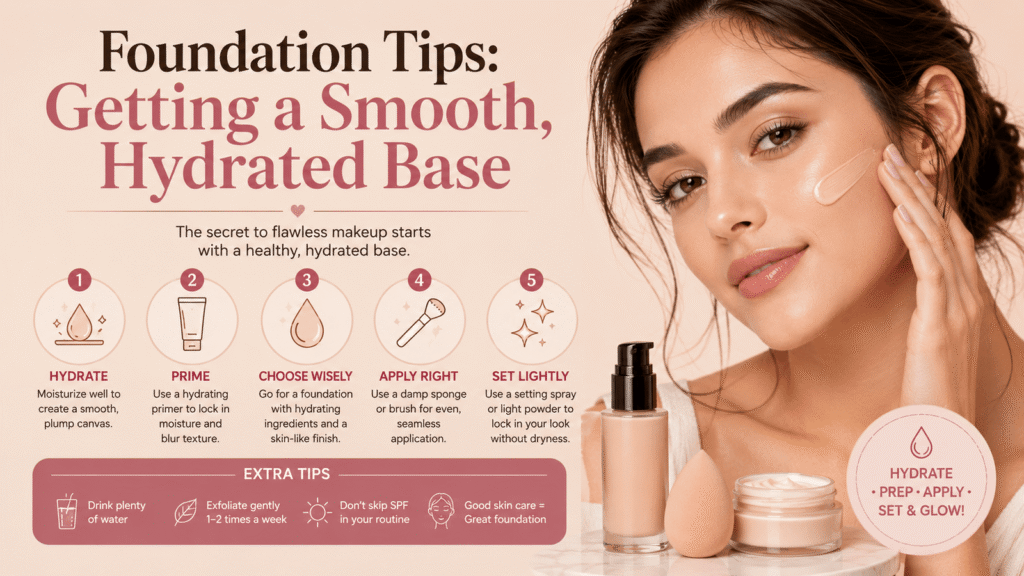
Foundation is where most dry skin makeup struggles happen. The trick is choosing a formula built for hydration and applying it in a way that adds moisture rather than removing it. Liquid, cream, and stick foundations with a dewy or satin finish tend to work best. Matte or powder foundations should generally be avoided, as they are formulated to soak up oil, something dry skin has very little of to begin with.
Look for foundations labeled “hydrating,” “dewy,” “luminous,” or “radiant.” Check the ingredient list for hyaluronic acid, glycerin, squalane, or ceramides. These ingredients help the foundation sit smoothly on the skin instead of settling into fine lines or dry patches.
| Foundation Finish | Good for Dry Skin? | Why |
| Matte | No | Absorbs oil, emphasizes flakiness |
| Dewy | Yes | Adds moisture and glow |
| Satin | Yes | Balanced, natural-looking finish |
| Powder | No | Clings to dry texture |
| Cream/Stick | Yes | Blends smoothly, buildable coverage |
Pro Tip: Apply foundation with a damp makeup sponge instead of a dry brush. A damp sponge presses product into the skin rather than dragging it across the surface, which reduces streaking and flaking.
Bonus Trick: Mix a small drop of facial oil or liquid highlighter into your foundation before applying. This is a favorite trick among professional makeup artists for creating a lit-from-within glow while adding extra slip for smoother blending.
Mini Conclusion: Choosing a hydrating formula and applying it with a damp sponge are two of the most powerful changes you can make for smoother, longer-lasting makeup.
5. Concealer Tricks for Dry Under-Eyes and Dry Patches
The under-eye area is often the driest part of the face, since it has very few oil glands. This makes concealer creasing a huge frustration for people with dry skin. The fix starts with prep: pat a small amount of eye cream into the area and let it absorb before applying any concealer.
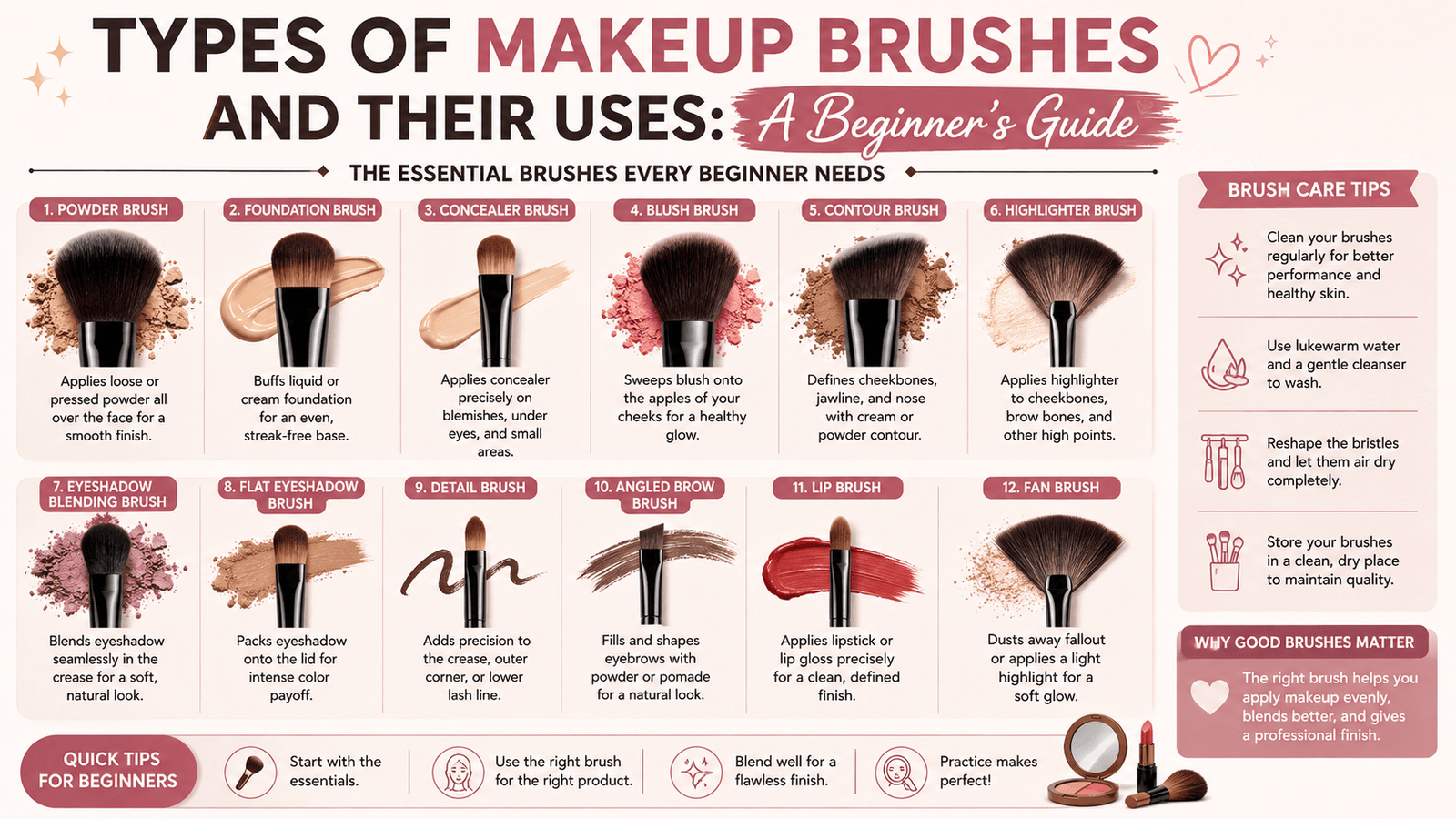
Choose a concealer with a creamy, hydrating formula rather than a thick, full-coverage one. Thinner formulas blend more easily and are less likely to settle into fine lines. Apply concealer in small dots rather than dragging it across the skin, then pat it in gently with your ring finger or a small sponge, since the ring finger naturally applies the lightest pressure.
Common Mistake: Using too much concealer at once is a major cause of creasing. It is much better to build up thin layers than to apply one thick layer, especially on dry or textured skin.
Expert Advice: Some makeup artists recommend setting concealer with a very small amount of translucent powder using a fluffy brush, applied only where needed, rather than pressing powder firmly into the skin. This technique, sometimes called “baking light,” helps prevent creasing without adding a heavy, powdery look.
Mini Conclusion: Gentle application, proper prep, and light setting are the keys to concealer that lasts without creasing on dry skin.
6. Powder Rules: When to Use It and When to Skip It
Many people assume powder is a required step in every makeup routine, but for dry skin, less is almost always more. Powder absorbs oil and moisture, which is exactly what dry skin cannot spare. Applying powder all over the face can immediately bring back the flaky, dull look you were trying to avoid.
Instead, only apply powder to the areas that genuinely get oily throughout the day, usually the T-zone (forehead, nose, and chin). Use a small, fluffy brush and a light hand. Skip powder entirely on the cheeks, under the eyes, and around the mouth if these areas tend to be dry.
Do’s vs Don’ts Table
| Do | Don’t |
| Use powder only where oily | Powder your entire face |
| Use a fluffy brush | Use a puff or heavy pressing motion |
| Choose finely milled, translucent powder | Choose thick, mattifying powders |
| Apply in thin layers | Apply thick layers at once |
Quick Tip: If your skin is extremely dry, you may not need powder at all. A good setting spray can lock in your makeup just as effectively without adding dryness.
Mini Conclusion: Powder is a tool for specific areas, not a blanket step, when you have dry skin.
7. Blush, Bronzer, and Highlighter for a Natural Glow
Cream and liquid formulas are your best friends when it comes to blush, bronzer, and highlighter on dry skin. Once you’ve mastered a glowing base, you can easily transform it into an evening look with this Day to Night Makeup Look guide. Powder versions of these products can look patchy and emphasize texture, while cream formulas blend seamlessly into the skin and add a healthy, natural-looking flush.
Apply cream blush with your fingertips, starting on the apples of your cheeks and blending upward and outward toward your temples. This mimics the way a natural flush appears on the skin and looks far more believable than harsh, sharp lines. For bronzer, choose a cream or liquid formula and apply it lightly along the areas the sun would naturally hit, such as the forehead, nose, and cheekbones.
Did You Know? Liquid highlighters containing light-reflecting particles suspended in a hydrating base can make skin look instantly more radiant, which is especially flattering for dry skin that tends to look dull rather than shiny.
Pro Tip: Dab a tiny bit of liquid highlighter on top of your cheekbones, the bridge of your nose, and your cupid’s bow for a lit-from-within glow that photographs beautifully.
Mini Conclusion: Cream and liquid color products blend better, look more natural, and enhance the glow that dry skin needs.
8. Eye Makeup Tips for Dry Eyelids
Dry eyelids can make eyeshadow look uneven, patchy, or prone to creasing throughout the day. The fix starts with a hydrating eye primer instead of a mattifying one. Pat the primer on gently and let it set for a minute before applying shadow.
Cream eyeshadows tend to work better than powder shadows If you’re just getting started, this Easy Smoky Eye Tutorial for Beginners will help you create soft, blended eye makeup without emphasizing dry eyelids. for very dry lids, as they blend smoothly and add a soft sheen. If you prefer powder shadows, apply them with a slightly damp brush, which helps the pigment stick evenly to the skin instead of falling into fine lines or flaking off throughout the day.
Common Mistake: Applying heavy amounts of powder eyeshadow directly onto dry, unprimed lids almost guarantees creasing and patchiness by midday.
Expert Advice: For eyeliner, avoid extremely matte, drying formulas. A slightly creamy pencil or a long-wear gel liner glides on more smoothly over dry lids than a harsh liquid liner, which can pull and tug at delicate skin.
Mini Conclusion: Hydrating primer, cream products, and gentle application techniques keep dry eyelids looking smooth instead of creased.
9. Lip Makeup for Dry, Chapped Lips
Lips have no oil glands of their own, which means they rely completely on outside moisture. This makes lip prep essential before applying any lipstick, especially matte formulas, which tend to be the most drying.
Start by gently exfoliating your lips with a soft toothbrush or a lip scrub For an even cleaner finish, follow this guide on How to Apply Lipstick Perfectly Without Bleeding to keep your lip color smooth and precise all day. to remove flaky skin. Follow with a nourishing lip balm and let it sit for a few minutes. Then, gently blot off any excess balm before applying lipstick, since too much residue can cause your color to slide around.
Choose hydrating or satin-finish lipsticks, tinted lip oils, or lip balms with a hint of color instead of long-wear matte formulas, which often contain drying agents. If you love the look of matte lipstick, apply a thin layer of balm first, then dab the lipstick on with your finger instead of swiping it directly from the tube for a softer, less drying finish.
Quick Tip: Keep a travel-size lip balm in your makeup bag and reapply throughout the day to prevent your lip color from looking flaky by the afternoon.
Mini Conclusion: Prepping and choosing hydrating lip formulas prevents the chapped, flaky look that matte lipsticks often cause on dry lips.
10. Setting Your Makeup So It Lasts All Day
Setting makeup for dry skin requires a gentler approach than setting makeup for oily skin. Instead of heavy setting powder, reach for a hydrating setting spray. These sprays often contain glycerin or aloe vera, which refresh the skin and melt makeup layers together for a natural, skin-like finish.
Hold the setting spray about 8 to 10 inches from your face and mist it in an “X” and “T” motion to cover your whole face evenly. Let it air dry naturally instead of patting it in, which could disturb your makeup.
Bonus Trick: Keep your setting spray in your bag for touch-ups throughout the day. A light mist can instantly refresh dry, tired-looking makeup without needing to reapply foundation.
Mini Conclusion: A hydrating setting spray locks your makeup in place while adding moisture back into the skin, keeping your look fresh for hours.
11. Seasonal Makeup Adjustments for Dry Skin
Dry skin often gets worse in winter due to cold air, Pairing your makeup routine with a consistent Anti-Aging Skincare Routine can also help strengthen your skin barrier and improve long-term hydration. indoor heating, and lower humidity levels. During colder months, switch to richer moisturizers, cream-based products, and hydrating primers with extra nourishing oils. You may also want to apply an extra layer of facial oil before makeup to combat harsh, dry air.
In summer, your skin may still be dry but can also produce a bit more oil in certain areas. Lighter hydrating formulas, along with a setting spray, can help balance moisture without feeling heavy in warmer weather. Always carry a hydrating mist for quick refreshers throughout the day, especially if you spend time in air-conditioned spaces, which can also dry out your skin.
Seasonal Comparison Table
| Season | Skincare Focus | Makeup Adjustment |
| Winter | Richer moisturizer, facial oil | Cream products, extra primer |
| Summer | Lightweight hydration | Setting spray, lighter layers |
| Monsoon/Humid | Balanced hydration | Waterproof, long-wear formulas |
Mini Conclusion: Adjusting your routine with the seasons helps your skin stay balanced and your makeup stay flawless year-round.
12. Budget vs Luxury Products for Dry Skin
You do not need to spend a fortune to get great makeup results for dry skin. Many affordable brands now offer hydrating formulas with hyaluronic acid and glycerin that perform beautifully. The most important thing is checking the ingredient list and finish type, not the price tag.
That said, some higher-end products do offer finer pigments, longer wear, and more skin-loving ingredients like ceramides and ceramide-rich ceramides complexes. If your budget allows, investing in a good hydrating primer or setting spray can make the biggest visible difference, since these products directly affect how your foundation behaves throughout the day.
| Product Type | Budget-Friendly Approach | Luxury Alternative |
| Foundation | Dewy-finish drugstore formulas | High-end hydrating foundations |
| Primer | Affordable glow-boosting primers | Luxury hydrating primers |
| Setting Spray | Drugstore hydrating mists | Premium dermatologist-formulated sprays |
| Lip Product | Tinted drugstore balms | Luxury lip oils |
Reality Check: Expensive does not always mean better for dry skin. Always prioritize the ingredient list and finish over the brand name or price.
Mini Conclusion: Great makeup for dry skin is achievable at any budget as long as you focus on hydrating ingredients and the right finish.
13. Common Myths About Makeup and Dry Skin
There are several myths that keep dry skin sufferers from getting the glowing look they want. Let’s clear a few of them up.
Myth 1: “Matte foundation lasts longer, so it’s always better.” In reality, matte foundation on dry skin often looks worse by midday because it clings to dry patches and emphasizes texture instead of smoothing it.
Myth 2: “You should skip moisturizer if you’re wearing makeup.” This is false. Moisturizer is the foundation of your foundation. Skipping it almost guarantees a patchy, flaky result.
Myth 3: “Powder is necessary for makeup to last.” For dry skin, powder is optional and should be used sparingly, only where needed, rather than applied all over the face.
Mini Conclusion: Believing these myths often leads to the exact problems dry skin sufferers are trying to avoid, so unlearning them is a key step toward better makeup days.
14. Common Mistakes and How to Fix Them
Even beauty lovers with years of experience can fall into these common traps. Here is a simple breakdown of mistakes and their fixes.
| Mistake | Why It Happens | Solution |
| Skipping skincare prep | Rushing the routine | Always cleanse, hydrate, moisturize first |
| Using matte foundation | Assuming it lasts longer | Switch to dewy or satin finish |
| Applying powder everywhere | Old beauty habits | Powder only oily zones |
| Heavy concealer layers | Trying to cover more | Build thin layers instead |
| Skipping lip prep | Forgetting lips need moisture too | Exfoliate and balm before lipstick |
| Not using setting spray | Unaware of its benefits | Add hydrating setting spray as final step |
Common Mistake: Rubbing foundation in with a dry brush is one of the fastest ways to create a flaky, uneven finish on dry skin. Always use a damp sponge or clean fingertips instead.
Mini Conclusion: Small changes to your routine, rather than buying entirely new products, often solve most dry skin makeup problems.
16. Final Thoughts
Makeup for dry skin does not have to feel like an uphill battle. Once you understand that hydration comes first and coverage comes second, everything else starts to click into place. From gentle skincare prep to choosing dewy formulas, applying with a damp sponge, and setting your look with a hydrating spray instead of heavy powder, small changes create a huge difference in how your makeup looks and lasts.
Remember, your skin is unique, and it may take a little trial and error to find your perfect routine. Be patient with yourself, listen to what your skin needs each day, and do not be afraid to adjust your products with the seasons. A healthy, well-moisturized skin barrier is the real secret behind every smooth, glowing makeup look you admire.
So the next time you sit down to do your makeup, treat your skin gently, hydrate generously, and apply with confidence. Your glow is already there, ready to shine through.
Frequently Asked Questions
What is the best foundation for dry skin?
Choose a hydrating liquid or cream foundation with a dewy finish. Look for ingredients like hyaluronic acid, glycerin, or ceramides.
Should I use primer if I have dry skin?
Yes. A hydrating primer helps moisturize the skin, smooth texture, and makes makeup last longer.
Why does my makeup look flaky by midday?
Flaky makeup is usually caused by dry skin, poor hydration, or using matte products. Prep your skin well and use hydrating formulas.
Can I still use powder if I have dry skin?
Yes, but use it lightly and only on oily areas like the T-zone to avoid emphasizing dry patches.
What ingredients should I look for in makeup for dry skin?
Look for hyaluronic acid, glycerin, squalane, ceramides, and vitamin E to keep skin hydrated and smooth.