

Do you ever put on your makeup in the morning, feel like a whole glam queen, and then check your face by lunchtime only to find your foundation has slid halfway down your nose? If that sounds painfully familiar, you are not alone. Oily skin is one of the most common skin types in the world, and it comes with its own special set of makeup challenges. Before applying any products, following a professional makeup prep routine can help oily skin stay fresh for much longer.
The good news? You do not need to give up makeup or hide your face from bright lights. You just need the right routine, the right products, and a few professional tricks that most beauty counters never tell you about. If you’re unsure whether you need a primer, learn is primer really necessary before makeup before moving to the next step.
Oily skin happens when your sebaceous glands produce more sebum (natural oil) than your skin actually needs. This is often linked to genetics, hormones, weather, and even the products you use. While oily skin can feel frustrating, it also has a hidden benefit that dermatologists often mention: oily skin tends to age slower and shows fewer fine lines because natural oils keep the skin more hydrated for longer.
So instead of fighting your skin type, this guide will help you work with it. We are going to walk through everything, from skincare prep before makeup, to primer, foundation, concealer, setting powder, blush, eyeshadow, and even the best setting sprays that lock everything in place for hours.
This is not a generic “one size fits all” guide. This is a complete, beginner-friendly, expert-backed roadmap built specifically for people who deal with shine, enlarged pores, and makeup that seems to melt off by afternoon. Whether you are a total beginner who just started experimenting with makeup, or someone who has tried everything and is still struggling with midday shine, this guide has something for you.
We will cover professional makeup artist tricks, dermatologist-style skincare advice, common myths about oily skin, real mistakes people make, budget-friendly options, luxury alternatives, and a full FAQ section answering the most searched questions about makeup for oily skin. By the end, you will have a complete, personalized routine that keeps you looking fresh, matte, and confident from morning meetings to late-night dinners.
Let’s get started.
1. Understanding Oily Skin: Why It Happens
Before you can fix a shine problem, it helps to understand where it comes from. Oily skin is caused by overactive sebaceous glands, tiny glands under your skin that produce an oily substance called sebum. Sebum is not a bad thing. It actually protects your skin from drying out and forms a natural barrier against bacteria. The problem starts when your glands produce too much of it.
Several factors can trigger excess oil production, including genetics, hormonal changes (especially during teenage years, periods, or pregnancy), humid weather, stress, and even using the wrong skincare products. Many people with oily skin also have larger, more visible pores, especially around the nose, forehead, and chin. This area is often called the T-zone, and it usually needs extra attention during makeup application.
Did You Know? According to dermatology sources such as the American Academy of Dermatology, oily skin is partly genetic, meaning if your parents had oily skin, there is a good chance you inherited the same tendency.
Understanding your skin is the first step toward controlling it instead of letting it control your makeup look. Once you know why your skin behaves the way it does, you can choose products that work with your biology instead of against it. For example, using heavy, creamy products on oily skin often backfires because it adds more oil to a surface that already has plenty.
A simple way to check your skin type at home is the “blotting sheet test.” Press a clean blotting paper on different areas of your face after cleansing and waiting 30 minutes. If it picks up oil from your forehead, nose, and chin but not your cheeks, you likely have combination oily skin. If oil shows up everywhere, you have fully oily skin. This tiny test can completely change how you approach your makeup routine because it tells you exactly where to focus your mattifying products.
Mini Conclusion: Oily skin is a natural, common skin type, not a flaw. Once you understand what causes the shine, you can build a routine that works with your skin instead of constantly fighting it.
2. Skincare Before Makeup: The Foundation of a Great Routine
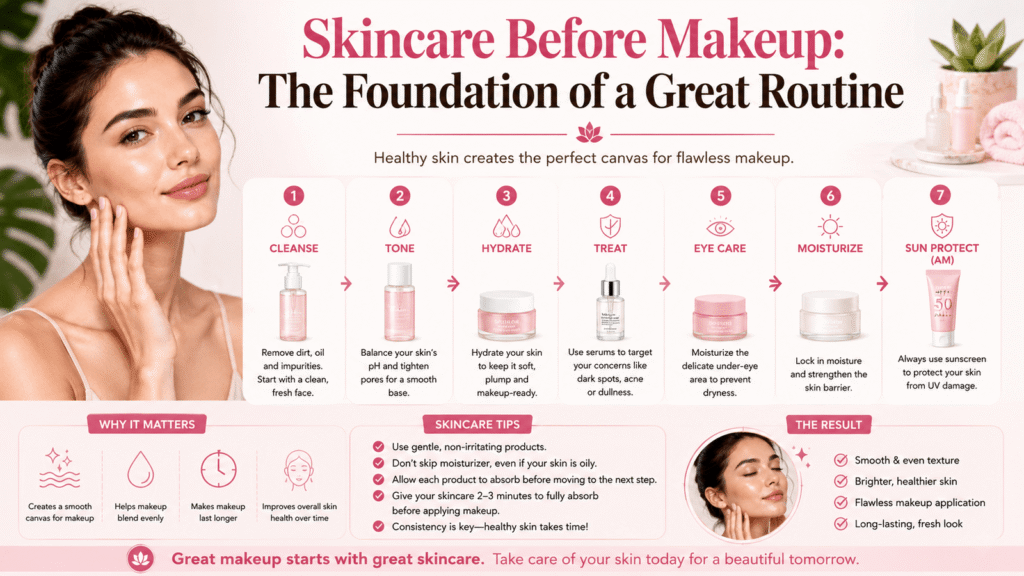
Here is a secret that many beginners miss: your makeup will only look as good as the skin underneath it. If your skincare routine is not suited for oily skin, no amount of expensive foundation will save your look by the afternoon. This is why skincare prep is not optional. It is the actual foundation, literally and figuratively, of your entire makeup routine.
Start with a gentle, oil-free cleanser that removes dirt and excess sebum without stripping your skin completely. Stripping your skin too much can actually backfire, because your glands may respond by producing even more oil to compensate. After cleansing, use a lightweight, alcohol-free toner to balance your skin’s pH and tighten the appearance of pores temporarily.
Pro Tip: Look for ingredients like niacinamide, salicylic acid, and green tea extract in your skincare products. These ingredients are well known in skincare circles for helping control oil production and calming irritated skin.
Moisturizer is another step people with oily skin often want to skip, thinking it will make their skin greasier. This is actually one of the biggest skincare mistakes. Skipping moisturizer can make your skin produce even more oil to protect itself. The trick is choosing a gel-based, oil-free, non-comedogenic moisturizer that hydrates without adding extra shine.
Sunscreen deserves its own mention here too. Many dermatology resources, including guidance echoed by the Cleveland Clinic and Mayo Clinic, emphasize daily sunscreen use regardless of skin type. For oily skin, choose a matte-finish, oil-free sunscreen labeled “non-comedogenic” so it does not clog pores or add greasiness under your makeup.
Quick Tip: Wait at least 5-10 minutes after applying moisturizer and sunscreen before starting makeup. This allows the products to fully absorb, preventing your foundation from sliding around.
Mini Conclusion: A proper skincare routine using lightweight, oil-free, and non-comedogenic products creates the smooth, balanced canvas your makeup needs to last all day.
3. Choosing the Right Primer for Oily Skin
Primer is the unsung hero of any oily skin makeup routine. Think of it as the base layer that creates a smooth barrier between your skin and your foundation, controlling oil throughout the day. Skipping primer is like painting a wall without sanding it first; the paint may look fine at first, but it won’t hold up.
For oily skin, look for silica-based or mattifying primers. These primers usually feel slightly powdery and help absorb excess oil throughout the day. Ingredients like silica, kaolin clay, and dimethicone are commonly found in mattifying primers because they help create a smooth, blurred finish while controlling shine.
Expert Advice: Professional makeup artists often apply primer only to the T-zone (forehead, nose, and chin) for oily skin clients instead of the entire face. This targets the oiliest areas without over-mattifying the cheeks, which can sometimes be normal or even dry.
Applying primer correctly matters just as much as choosing the right one. Use a small amount, about a pea-sized drop, and gently press it into your skin with clean fingers or a damp sponge rather than rubbing it in circular motions. Rubbing can activate more oil production and cause the primer to pill up on your skin.
Common Mistake: Using too much primer. More product does not mean more oil control. In fact, applying a thick layer can actually make your foundation slide off faster because the surface becomes too slippery.
Mini Conclusion: A good mattifying primer, applied strategically to oily zones, is the secret weapon that keeps your entire makeup look locked in place for hours.
4. Best Foundation Types and Application Techniques
When it comes to foundation, oily skin needs formulas that offer coverage without adding extra shine. The best options are usually labeled “matte finish,” “oil-free,” or “long-wear.” Choosing the correct shade is equally important, so learn how to choose the right foundation shade before buying a new foundation. These foundations are formulated to absorb oil throughout the day rather than sit on top of it.
Powder foundations and matte liquid foundations tend to work best for oily skin. Powder foundations are great for those who want a quick, low-maintenance routine, while matte liquid foundations offer more buildable coverage for special occasions or professional settings.
| Foundation Type | Best For | Coverage Level | Longevity on Oily Skin |
| Matte Liquid Foundation | Everyday wear, medium-to-full coverage | Medium to Full | High |
| Powder Foundation | Quick application, minimal shine | Light to Medium | Medium to High |
| Stick Foundation (Matte) | On-the-go touch-ups, contouring | Medium to Full | Medium |
| Dewy/Illuminating Foundation | Dry or combination skin (not ideal for very oily skin) | Light to Medium | Low on oily zones |
Pro Tip: Apply foundation using a damp makeup sponge instead of a brush. A damp sponge presses the product into the skin rather than smearing it, which creates a thinner, more natural, and longer-lasting finish.
Application technique matters as much as product choice. Start from the center of your face and blend outward. Building up thin layers works far better than applying one thick layer, especially for oily skin, because thick layers are more likely to separate or slide as the day goes on.
Reality Check: No foundation is 100% “oil-proof” for 12+ hours without any touch-ups. Even the best long-wear formulas need a little help from setting powder and blotting throughout the day, especially in hot or humid weather.
Mini Conclusion: Choosing a matte or long-wear foundation and applying it with a damp sponge in thin layers gives oily skin the best combination of coverage and staying power. If your base still separates during the day, discover why foundation looks patchy and how to fix it for a smoother finish.
5. Concealer Tips for Oily Skin
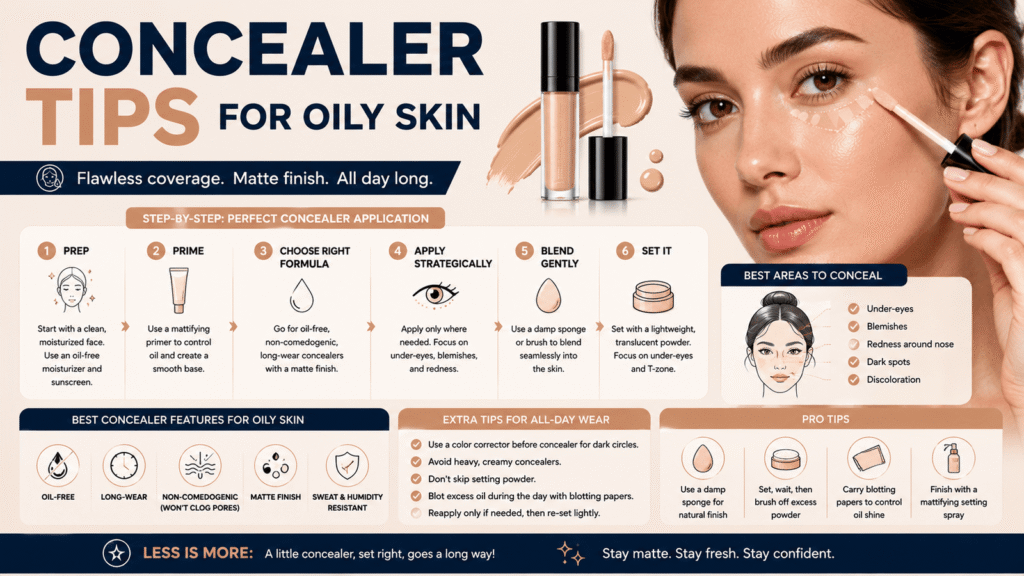
Concealer plays a big role in covering dark circles, blemishes, and redness, but on oily skin, it can also be one of the first things to crease. The trick is choosing a concealer with a matte or satin finish rather than a dewy one, since dewy concealers tend to slide into fine lines faster when combined with natural oil.
Apply concealer after foundation, not before, so you only use it where you actually need extra coverage. This prevents cakey buildup, which is a common problem for people with oily skin who tend to over-apply products trying to control shine.
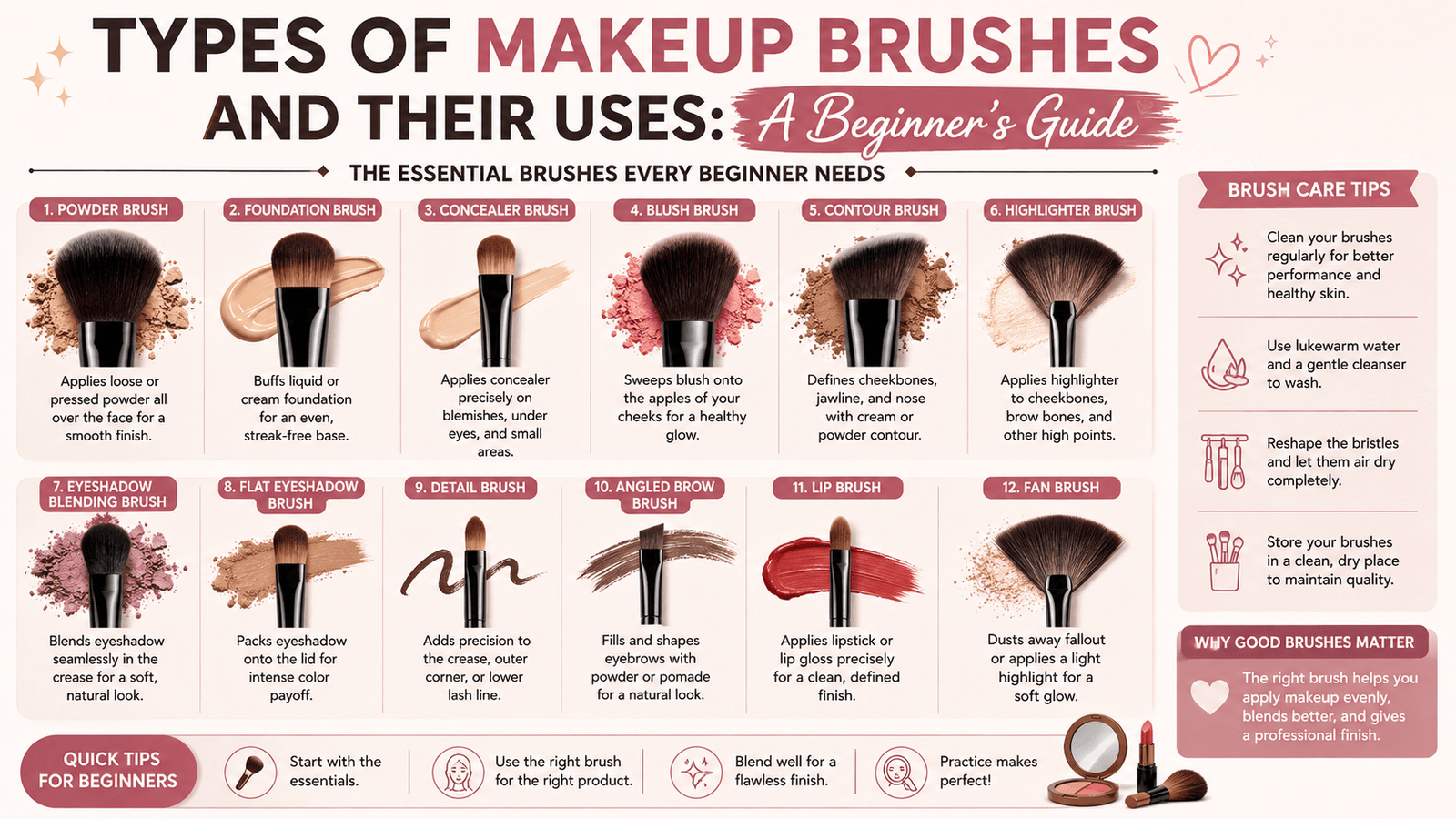
Expert Advice: Use a small, tapered brush to apply concealer precisely under the eyes and on blemishes, then blend gently with a damp sponge. Avoid rubbing concealer in with your fingers, since natural hand oils can break down the product faster.
Common Mistake: Applying too much concealer under the eyes in a large triangle shape. While this technique works beautifully on normal or dry skin, oily skin often does better with a thinner, more targeted application to avoid creasing later in the day.
Mini Conclusion: A matte, targeted concealer application, set immediately with translucent powder, helps oily skin avoid the dreaded midday crease lines under the eyes.
6. Setting Powder: Your Best Friend Against Shine
If there is one product that oily skin girls (and guys) simply cannot skip, it is setting powder. This step locks your foundation and concealer in place, absorbs excess oil, and gives your skin a soft, blurred finish that lasts for hours.
Translucent powder is the most versatile option because it does not add color, making it perfect for setting your entire face. Look for finely milled, oil-absorbing powders that contain ingredients like silica or rice powder, which are known for their mattifying properties.
Pro Tip: Use the “baking” technique for extra oily areas. Apply a thicker layer of powder to your T-zone and under-eye area, let it sit for 3-5 minutes while you finish the rest of your makeup, then dust off the excess with a fluffy brush. This technique is popular among professional makeup artists for long events like weddings.
For touch-ups throughout the day, carry a compact pressed powder instead of reapplying liquid foundation. Pressed powder is easier to apply on top of existing makeup and helps absorb new oil without disturbing your base.
Quick Tip: Blotting papers are a great alternative for midday touch-ups when you do not want to add more product to your face. Simply press the paper onto oily areas to soak up excess sebum, then apply a light dusting of powder if needed.
Mini Conclusion: Setting powder, especially using the baking technique on oily zones, is essential for keeping your foundation matte and crease-free throughout a long day.
7. Blush, Bronzer, and Contour for Oily Skin
Cream and liquid blush or bronzer products can look beautiful, but they tend to move around more on oily skin as the day progresses. For long-lasting color, powder-based blush, bronzer, and contour products are usually the safer choice.
Apply these products after your setting powder step, using a fluffy brush for a soft, natural blend. Building color gradually with light layers gives a more natural finish and prevents the “melted” look that can happen when too much cream product is layered over oily skin.
Expert Advice: If you love the natural glow of cream blush, apply a tiny dot on top of your powder blush for a subtle sheen without compromising the longevity of your base makeup. This hybrid technique gives you the best of both worlds.
Common Mistake: Applying bronzer or contour too heavily in an attempt to create definition. On oily skin, heavy cream contour products often separate or streak by midday. A lighter hand with powder products, built up gradually, creates a much longer-lasting result.
Mini Conclusion: Powder-based blush, bronzer, and contour products applied in thin layers help maintain definition and color without shifting throughout the day.
8. Eye Makeup That Doesn’t Crease or Smudge
Oily eyelids are a real struggle many people do not talk about enough. Eyeshadow creasing into the eyelid crease within a few hours is one of the most common complaints among people with oily skin. The solution starts with a dedicated eyeshadow primer, separate from your face primer, applied directly to the eyelid before any eyeshadow.
Powder eyeshadows generally last longer on oily lids compared to cream shadows, For an even more flattering look, learn how to make your eyes look bigger with makeup using simple eye-enhancing techniques. since cream formulas are more likely to shift with natural oil. If you do want to use cream eyeshadow for its beautiful blend of color, always set it with a matching powder shadow on top to lock it in place.
Pro Tip: For eyeliner and mascara, choose waterproof or long-wear formulas, especially if your eyelids tend to get oily throughout the day. Waterproof formulas resist smudging far better than standard versions.
Common Mistake: Skipping eyeshadow primer because “it’s just for the eyes.” This is one of the most overlooked steps, yet it makes one of the biggest differences in how long your eye makeup lasts.
Mini Conclusion: A dedicated eyeshadow primer combined with powder-based products and waterproof eyeliner and mascara keeps your eye makeup crisp and crease-free all day long.
9. Setting Spray and All-Day Wear Tips
The final step that ties your entire look together is setting spray. For oily skin, a mattifying or long-lasting setting spray is non-negotiable. This spray creates an invisible layer over your makeup that helps everything stay in place and resist shine for hours.
Hold the setting spray about 8-10 inches from your face and mist it in an “X” and “T” motion, covering your entire face evenly. Let it air dry naturally instead of patting it with a towel, since patting can disturb your carefully applied makeup.
Bonus Trick: Keep a travel-sized setting spray or mattifying facial mist in your bag for midday refreshes. A light spritz can revive your makeup and add a fresh, just-applied appearance even hours after your original application.
Quick Tip: Blotting papers combined with a spritz of setting spray work wonders for touch-ups. Blot first to remove excess oil, then mist lightly to refresh your look without adding more product buildup.
Mini Conclusion: A good mattifying setting spray, applied correctly, acts as the final seal that helps your entire routine survive long days, humid weather, and busy schedules.
10. Common Mistakes People With Oily Skin Make
Even with the best products, small habits can undo an entire routine. If you also struggle with acne marks, check out how to cover blemishes naturally for extra coverage tips. Here are the most common mistakes people with oily skin make, along with simple solutions for each one.
| Mistake | Why It Happens | Solution |
| Skipping moisturizer | Fear of adding more oil | Use a lightweight, oil-free gel moisturizer |
| Using too much powder | Trying to control shine aggressively | Apply powder only where needed, in thin layers |
| Touching face throughout the day | Habit, checking for shine | Use blotting papers instead of fingers |
| Choosing dewy or illuminating products | Liking the “glow” trend | Choose matte or satin finishes instead |
| Not using primer | Thinking it’s an unnecessary extra step | Always apply a mattifying primer before foundation |
| Over-washing the face | Believing it reduces oil | Cleanse twice daily maximum with a gentle cleanser |
Reality Check: Over-washing your face can actually make oily skin worse, not better. Washing too often strips natural oils, causing your skin to overcompensate by producing even more sebum.
Mini Conclusion: Avoiding these small but common mistakes can make a bigger difference in how long your makeup lasts than switching to a more expensive product.
11. Common Myths About Oily Skin and Makeup
There are many myths floating around about oily skin, and believing them can actually make your routine worse. Let’s clear up a few of the most common ones.
Myth 1: Oily skin does not need moisturizer. As mentioned earlier, skipping moisturizer can trigger even more oil production. Every skin type needs hydration, just in different textures and formulas.
Myth 2: Matte makeup means no glow at all. You can still achieve a healthy, radiant look with strategic highlighter placement on the high points of your face, even while keeping the rest of your look matte.
Myth 3: More powder equals longer-lasting makeup. Excess powder can actually create a cakey, dry-looking finish that emphasizes texture and fine lines rather than smoothing them.
Myth 4: Oily skin does not age. While oily skin does tend to show fewer fine lines over time due to natural hydration from sebum, it still needs sun protection and proper skincare to age well.
Mini Conclusion: Understanding the difference between myths and facts helps you make smarter choices instead of following outdated or incorrect beauty advice.
12. Seasonal Makeup Tips for Oily Skin
Your oily skin routine may need small adjustments depending on the season. Summer heat and humidity naturally increase oil production, meaning you may need lighter coverage, more frequent blotting, and a stronger emphasis on waterproof and long-wear formulas.
In winter, indoor heating can sometimes dry out the surface of your skin while your glands still produce excess oil underneath, leading to a combination of flaky patches and shine. During colder months, focus on a slightly richer (but still oil-free) moisturizer and consider using primer only on your T-zone instead of your entire face.
Pro Tip: Keep two different setting sprays on hand: a mattifying one for summer and a slightly more hydrating (but still long-wear) one for winter, so your skin gets exactly what it needs each season.
Quick Tip: Spring and fall are usually more forgiving seasons for oily skin, but it is still smart to carry blotting papers year-round since indoor air conditioning and heating can both affect your skin’s oil balance.
Mini Conclusion: Adjusting your routine slightly for each season helps you maintain consistent, long-lasting makeup no matter the weather outside.
13. Budget vs Luxury Product Guide
You do not need to spend a fortune to control oily skin. Many drugstore brands now offer excellent mattifying primers, oil-free foundations, and setting powders that perform just as well as higher-end options.
| Product Type | Budget-Friendly Approach | Luxury Alternative |
| Primer | Silicone or silica-based drugstore mattifying primer | High-end pore-blurring primer with added skincare benefits |
| Foundation | Drugstore matte, long-wear liquid foundation | Prestige matte foundation with advanced oil-control technology |
| Setting Powder | Drugstore translucent loose powder | Finely milled luxury setting powder |
| Setting Spray | Affordable mattifying facial mist | Long-wear, weather-resistant setting spray |
Expert Advice: Focus your budget on the products that touch your skin the longest, like foundation and setting powder, and save money on products used briefly, like blush or highlighter, since both budget and luxury versions often perform similarly in those categories.
Mini Conclusion: With the right ingredient knowledge, you can build an effective oily skin routine at any budget, without compromising on wear time or finish.
14. Product Buying Guide: What to Look For on Labels
When shopping for makeup as someone with oily skin, reading the label carefully can save you time, money, and frustration. Look for words like “oil-free,” “matte finish,” “non-comedogenic,” and “long-wear” on foundation, primer, and concealer products.
Avoid products labeled “dewy,” “luminous,” “hydrating glow,” or “illuminating” for your base products, since these formulas are designed to add moisture and shine, which oily skin already has plenty of.
Checklist for Oily Skin Product Shopping:
- [ ] Oil-free or water-based formula
- [ ] Non-comedogenic (won’t clog pores)
- [ ] Matte or satin finish
- [ ] Long-wear or long-lasting label
- [ ] Contains mattifying ingredients like silica or kaolin clay
- [ ] Free from heavy oils like coconut oil or mineral oil (unless specifically formulated for balance)
Mini Conclusion: Learning to read ingredient and finish labels empowers you to make smarter purchases and avoid products that will fight against your skin type.
Frequently Asked Questions
1. What foundation is best for oily skin?
Matte, oil-free, long-wear foundations work best for controlling shine.
2. Do I need primer for oily skin?
Yes. A mattifying primer helps control oil and keeps makeup in place longer.
3. How can I stop makeup from sliding off?
Use primer, apply thin layers, set with powder, and finish with setting spray.
4. Is powder or liquid foundation better?
Both work well matte liquid offers more coverage, while powder helps control oil.
5. Should oily skin use moisturizer before makeup?
Yes. Use a lightweight, oil-free moisturizer to keep skin balanced and improve makeup wear.