

Strong, healthy nails do not happen by accident, they are the result of consistent care habits applied over weeks and months. The same biological principles that govern skin health apply to nails: hydration, protection, gentle treatment, and good nutrition.
This comprehensive routine covers everything from the correct way to file to the products that genuinely make a difference, including a weekly and daily maintenance plan. Just like your skincare and makeup routine, using fresh beauty products is equally important, so it’s worth learning When to Replace Your Makeup Products to keep your skin and nails healthy.
Understanding Nail Biology
The nail plate is made of hardened keratin, the same protein that makes up hair. It grows from the nail matrix, the living tissue under the base of the nail. Visible nails are dead tissue, which is why damage to the nail plate cannot be repaired, only grown out.
Hydration is the key factor in nail health. Dehydrated nails are brittle, peel, and break. The nail plate absorbs and loses water rapidly, this is why nails become soft after prolonged water exposure and brittle in dry climates. Cuticle oil applied daily counteracts this cycle.
Daily Nail Care Routine
Morning
50. Apply cuticle oil, 1 drop per nail, massage in
51. Push back any raised cuticle with a clean metal pusher
52. Apply hand cream after washing hands
If your hands also suffer from dryness, these Expert Makeup Tips for Dry Skin can help you improve overall skin hydration before applying makeup.
Evening
53. Apply cuticle oil generously before bed
54. Apply hand cream or a thick balm over nails and cuticles
55. For dry, cracked cuticles: apply petroleum jelly and wear thin cotton gloves overnight
Weekly Nail Care Routine
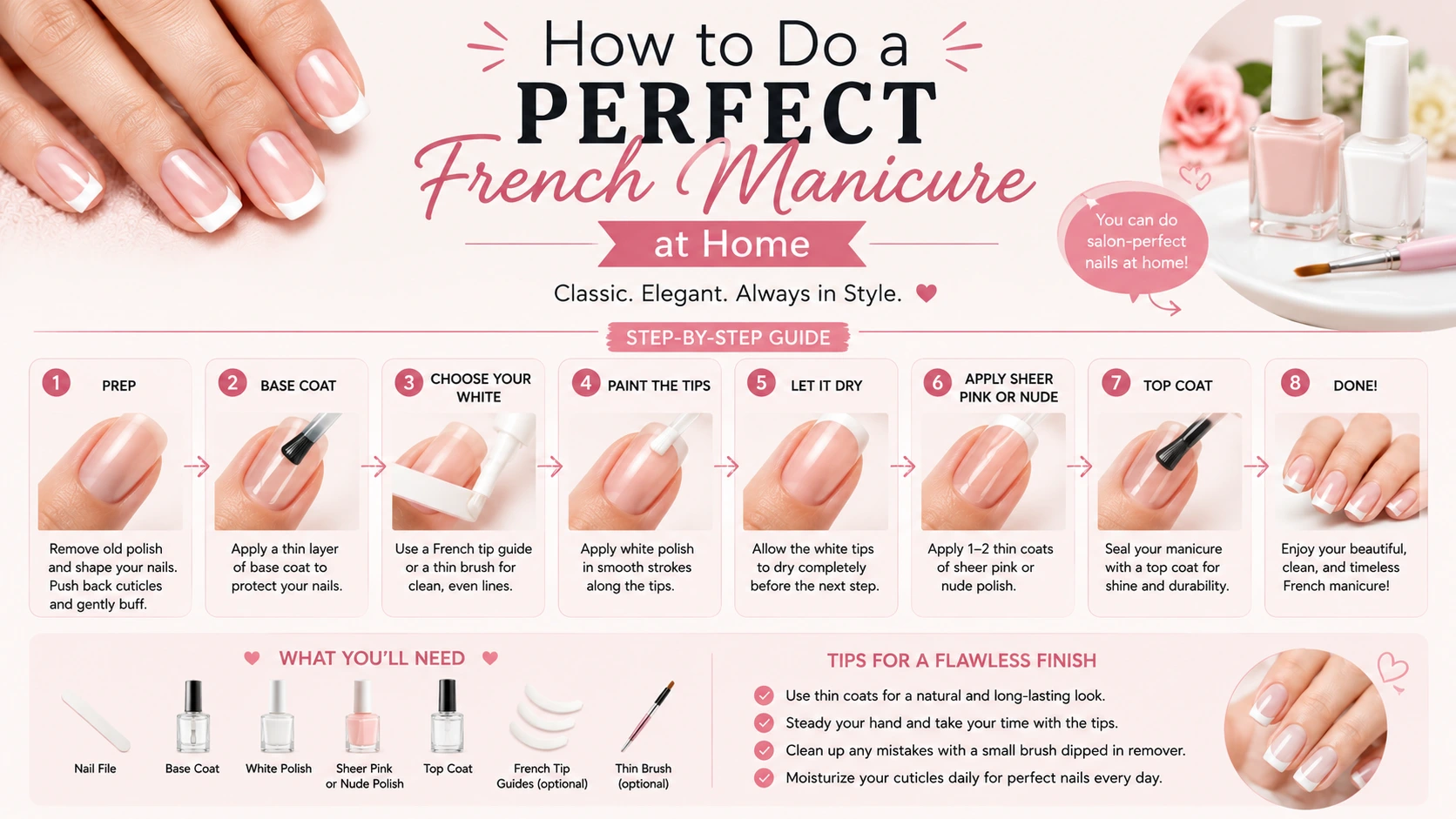
Step 1, Remove Old Polish
Use acetone-free nail polish remover for regular polish, pure acetone is too drying for weekly use unless removing gel. Press a remover-soaked pad onto each nail and hold for 10 seconds before wiping. This dissolves rather than smears the polish, producing a cleaner removal.
Step 2, Soak and Soften
Soak fingertips in warm water for 3–5 minutes to soften the skin around the nails. Add a few drops of olive oil to the soak for additional nourishment. Pat dry after soaking.
Step 3, Push Back Cuticles
Never cut cuticles, they are the protective barrier that seals the nail matrix from bacteria and infection. Push them back gently with a rubber-tipped cuticle pusher or an orange stick wrapped in cotton. Apply cuticle oil first to soften and prevent tearing.
Step 4, File and Shape
Use a glass file and file in one direction only, from outer corner toward the centre tip. Choose your nail shape: square (file straight across, soften corners), oval (file from sides toward tip in a curved motion), or almond (file sides at an angle for a tapered effect).
File nails when dry, not wet, wet nails are soft and more prone to damage during filing.
Step 5, Buff
Gently buff the nail surface with a 4-way nail buffer to smooth any ridges. One light pass is sufficient, over-buffing thins the nail plate. Buffing creates a smooth surface that makes nail polish adhere more evenly.
Step 6, Hydrate
Apply cuticle oil generously after the entire routine. Massage in thoroughly. Follow with hand cream applied to the nails and surrounding skin. This is the most important recovery step.
Nail Shapes Guide
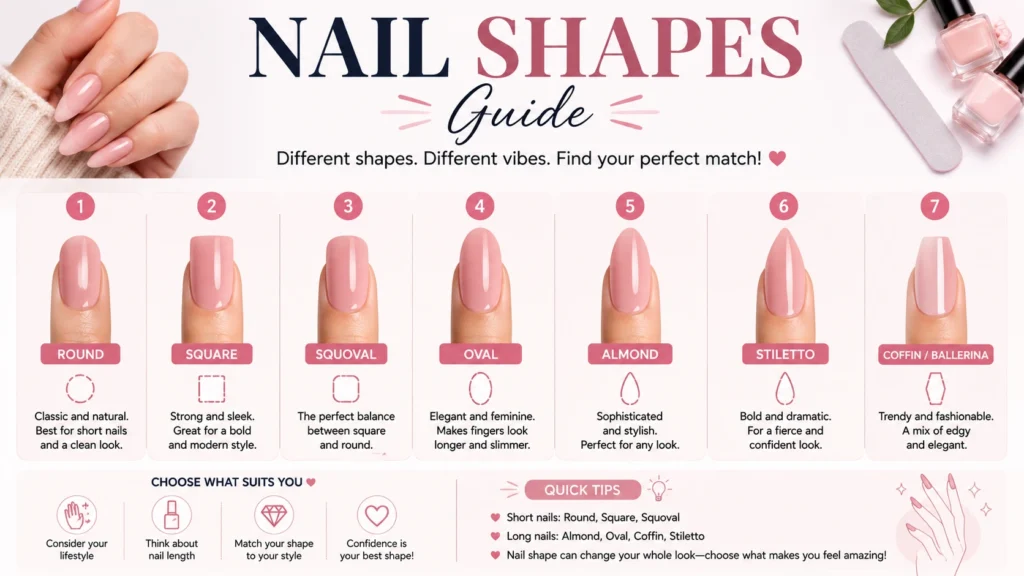
Square
Filed straight across with sharp right-angle corners. Looks bold and modern. Best for: wide nail beds, strong nails, nail art.
Rounded
Filed straight across with gently rounded corners. Looks natural and clean. Best for: beginners, natural nails, short nails.
Oval
Filed from sides tapering gently to a soft point at the tip. Elongates fingers. Best for: short or wide fingers, elegant looks.
Almond
Tapered sides meeting at a more pointed tip. Dramatic and elongating. Best for: longer nail lengths, editorial looks.
Squoval
Square with slightly softened corners. The most universally flattering shape, combines the boldness of square with the softness of oval. Best for: all finger types.
Nail Care Products That Make a Difference
Cuticle Oils Worth Using
Healthy hands create the perfect base for makeup too, and these Makeup Tips for Dry Skin can help you achieve a smoother, more hydrated finish.
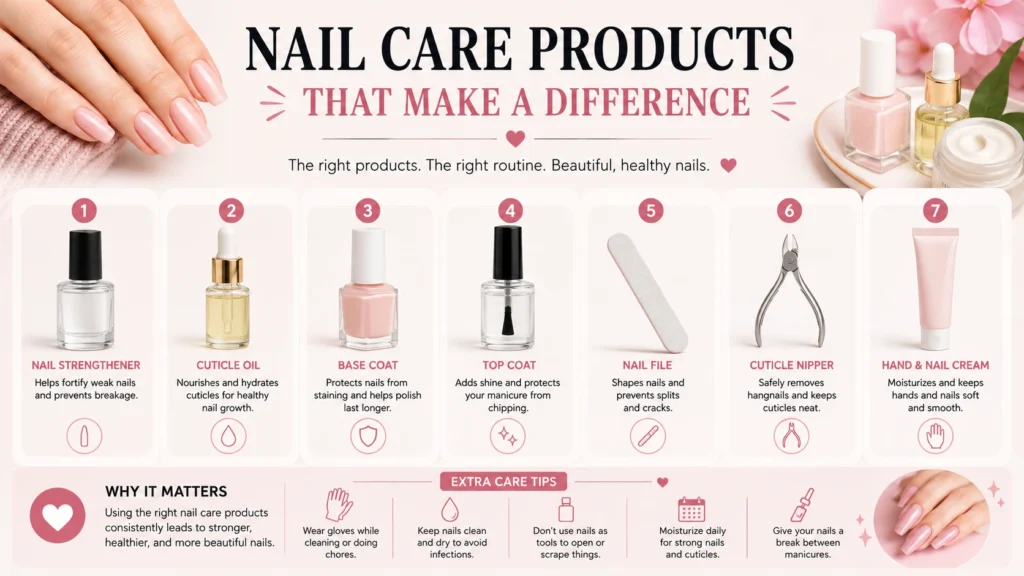
• CND SolarOil, the industry standard, rapid absorption
• OPI ProSpa Nail and Cuticle Oil, nourishing, pleasant application
• Budget: Burt’s Bees Lemon Butter Cuticle Cream, accessible, effective
Nail Strengtheners
• OPI Nail Envy, the most recommended nail strengthener for brittle nails
• Nail Tek Foundation II, for peeling and splitting nails
• Essie Hard to Resist, affordable strengthener with notable results
Base Coats
• Orly Bonder, exceptional adhesion, prevents staining
• Essie Treat Love and Color, strengthening base with subtle colour
Nutrition for Nail Health
• Protein: keratin is protein, adequate dietary protein is essential for nail growth and strength
• Biotin (Vitamin B7): 2.5mg daily shown to increase nail thickness in deficient individuals
• Iron: deficiency causes brittle, concave nails, common in women
• Zinc: deficiency causes white spots and slow growth
• Omega-3 fatty acids: support nail plate hydration from within
A healthy beauty routine isn’t limited to nail care. If your skin tends to become shiny throughout the day, following the Best Makeup Routine for Oily Skin can help balance your overall beauty regimen.
Habits That Destroy Nail Health
• Peeling gel polish, removes upper layers of the nail plate causing thinning
• Using nails as tools, opening packages, scraping stickers
• Cutting cuticles, removes the protective seal, increases infection risk
• Filing back and forth, causes micro-tears and peeling
• Skipping base coat, nail polish without base coat causes severe staining
Caring for your hands also means paying attention to delicate areas like your eyes. If you struggle with makeup settling into fine lines, these tips to Prevent Concealer Creasing Under Your Eyes can help create a smoother, longer-lasting look.
Final Thoughts
Healthy nails take 6–12 months to fully grow out from root to tip. The daily cuticle oil habit and weekly filing routine create the foundation. The nail you see today started growing 3–6 months ago, the care you do today will show up in 3–6 months. Start now, be consistent, and the results will accumulate into nails you genuinely love.
Frequently Asked Questions
Q: How do I stop my nails from breaking?
A: Nail breakage is most commonly caused by dehydration, keep nails and cuticles moisturised with cuticle oil daily. Avoid prolonged water exposure without gloves, use acetone-free polish remover, file in one direction only, and consider a nail hardener treatment.
Q: How often should I apply cuticle oil?
A: Daily, ideally twice daily, morning and evening. Cuticle oil nourishes both the cuticle and the nail plate, preventing brittleness and peeling. Consistent daily application is the single most impactful nail health habit.
Q: Does biotin really help nail growth?
A: Studies show biotin supplementation (2.5mg daily) measurably increases nail thickness in those with biotin deficiency. Results appear after 6 months of consistent supplementation. Biotin topically in nail products has less evidence but is generally beneficial.
Q: How do I grow my nails faster?
A: Nails grow approximately 3mm per month. To maximise growth rate: maintain good nutrition (protein, biotin, iron), keep cuticles moisturised, protect nails from water damage, avoid picking and peeling, and file regularly to prevent breakage before nails reach desired length.
Q: What is the correct way to file nails?
A: Always file in one direction, not back-and-forth sawing motions. Sawing creates micro-tears at the tip that cause peeling and breaking. Use a glass or crystal nail file for the least damaging, most precise filing. Start from the outer edge and file toward the centre.