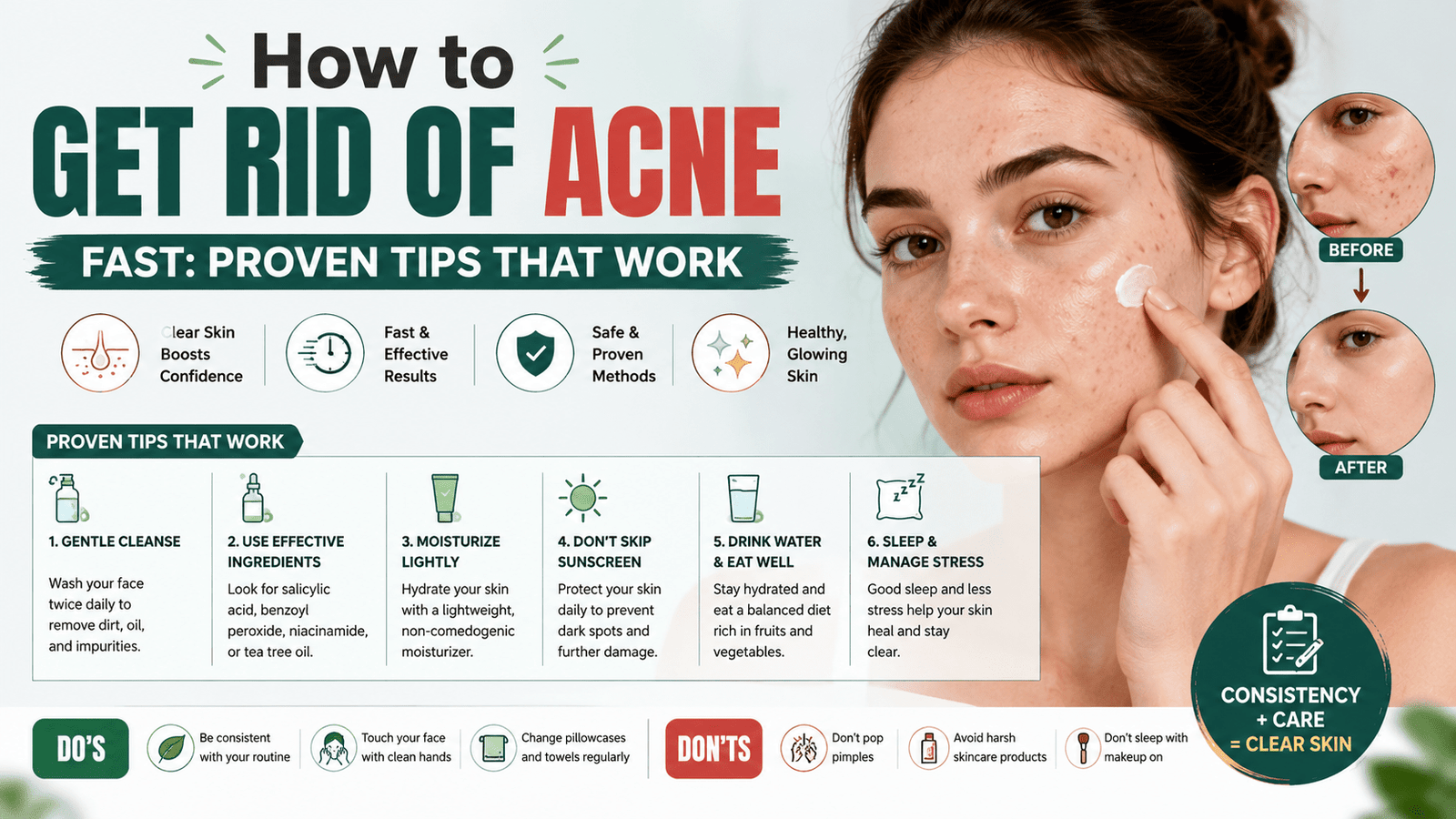


Acne is one of the most common skin concerns in the world, affecting people of all ages. Whether you have the occasional pimple or persistent breakouts, the right approach can clear your skin faster than you think.
This guide covers everything from overnight spot treatments to long-term prevention all backed by dermatology.
Understanding What Causes Acne
Acne forms when a combination of factors occur simultaneously:
4. Excess oil (sebum) production clogs pores
5. Dead skin cells accumulate and block the follicle
6. Bacteria (C. acnes) multiply inside the blocked pore
7. The immune system responds with inflammation
Triggers include hormonal fluctuations, stress, diet (high-glycaemic foods and dairy for some people), certain skincare products, and touching your face frequently.
Types of Acne and How to Treat Each
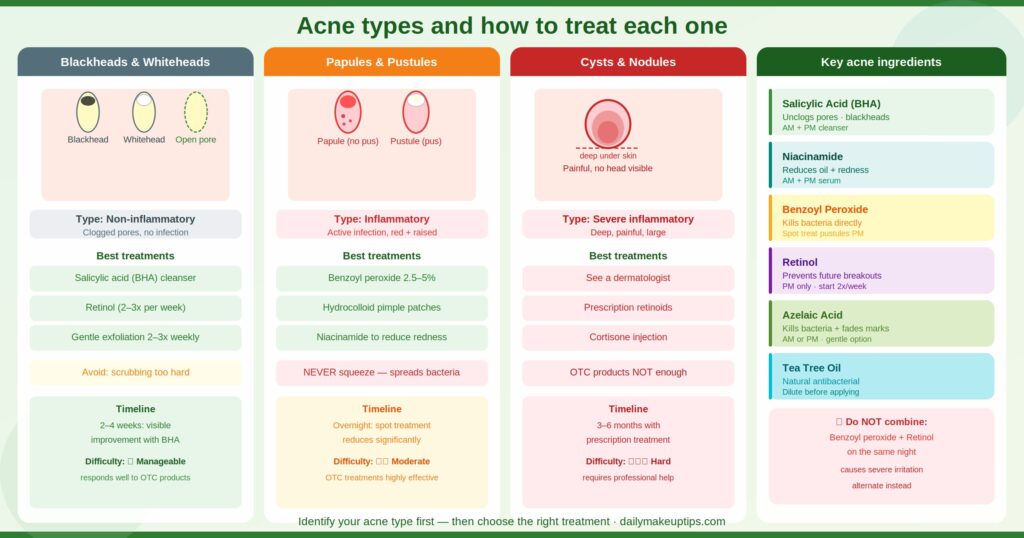
Whiteheads and Blackheads (Non-Inflammatory)
These are clogged pores without active infection. Treatment: salicylic acid cleansers, retinol, and gentle physical exfoliation 2–3 times weekly. BHA (salicylic acid) is oil-soluble and penetrates into pores to dissolve the blockage.
Papules and Pustules (Inflammatory)
Red, raised bumps with or without pus. Treatment: benzoyl peroxide (kills bacteria), niacinamide (reduces redness), and targeted spot treatments. Do not squeeze squeezing spreads bacteria and causes scarring.
Cysts and Nodules (Severe)
Deep, painful, large breakouts beneath the skin surface. These require dermatologist treatment — prescription retinoids, antibiotics, or in some cases cortisone injections. Over-the-counter products do not fully address cystic acne.
| Important: If you have persistent cystic acne, see a dermatologist. Prescription treatments work dramatically better than any over-the-counter product for severe acne. |
How to Get Rid of a Pimple Fast Overnight Treatments
Benzoyl Peroxide Spot Treatment
Apply a 2.5–5% benzoyl peroxide spot treatment directly onto the pimple after cleansing. It kills the bacteria causing the breakout and reduces redness overnight. Use a thin layer more product does not mean faster results and can cause dryness and irritation.
Salicylic Acid Patch
Hydrocolloid patches (pimple patches) containing salicylic acid draw out pus, absorb excess oil, and create a protected environment for the skin to heal. Wear overnight. The patch turns white when it has absorbed impurities. These are especially effective on pustules (pimples with pus).
Cortisone Cream (OTC 1%)
A very thin layer of 1% hydrocortisone cream can dramatically reduce inflammation in a large, red pimple within hours. Use sparingly and never on cystic acne it is a short-term anti-inflammatory, not a treatment for the underlying cause.
Ice Wrap
Wrap a cube of ice in a clean cloth and hold against the pimple for 1–2 minutes. This constricts blood vessels, reduces swelling and redness temporarily, and can make a pimple look significantly smaller and less inflamed within minutes.
The Clear Skin Daily Skincare Routine
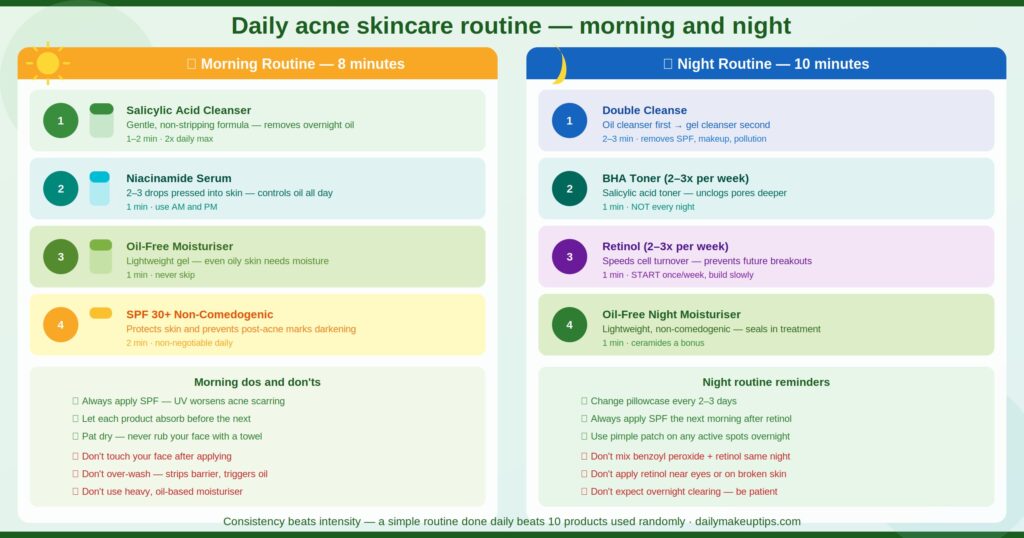
Morning Routine for Acne-Prone Skin
8. Gentle salicylic acid or gel cleanser
9. Niacinamide serum reduces oil production and redness
10. Oil-free moisturiser even oily skin needs moisture
11. Non-comedogenic SPF 30+ sun damage worsens acne scarring
Evening Routine for Acne-Prone Skin
12. Double cleanse oil cleanser first, then gel cleanser
13. BHA toner (salicylic acid), 2–3 times per week, not nightly
14. Retinol or adapalene start once a week, build gradually
15. Lightweight, non-comedogenic moisturiser
Key Ingredients That Clear Acne
• Salicylic acid (BHA): unclogs pores, reduces blackheads and whiteheads
• Benzoyl peroxide: kills acne bacteria, best for papules and pustules
• Retinol / adapalene: speeds cell turnover, prevents future breakouts, fades scars
• Niacinamide: reduces inflammation, controls oil, minimises pores
• Azelaic acid: kills bacteria AND fades post-acne dark marks simultaneously
• Tea tree oil: natural antibacterial, gentler alternative for sensitive skin
Lifestyle Changes That Clear Skin
Diet
Research links high-glycaemic foods (white bread, sugar, processed carbs) and dairy with acne flares in some people. An elimination approach removing one category for 4 weeks and observing changes — is the most practical way to identify personal triggers.
Sleep
Sleep deprivation raises cortisol levels, which increases oil production and inflammation. Aim for 7–9 hours. Change your pillowcase every 2–3 days, pillowcases accumulate oil, dead skin, and bacteria overnight.
Stress Management
Stress triggers cortisol spikes that directly increase sebum production. Consistent exercise, mindfulness, and adequate sleep all reduce cortisol levels and their effect on skin.
What Not to Do
• Do not pop or pick it causes scarring, spreads bacteria, and prolongs healing
• Do not over-cleanse washing more than twice daily strips the skin barrier and triggers more oil production
• Do not layer too many actives, benzoyl peroxide and retinol used together cause irritation
• Do not touch your face, your hands carry bacteria and oil
• Do not skip moisturiser, dehydrated skin overproduces oil to compensate
How Long Does It Take to Clear Acne?
• Overnight: a single pimple can be significantly reduced with spot treatment
• 1–2 weeks: a routine change begins to reduce active breakouts
• 4–8 weeks: new skincare routine shows full results
• 3–6 months: retinol and prescription treatments reach full effectiveness
Patience is essential. Acne skincare is a long game. Consistent use of proven ingredients over weeks and months will clear your skin more effectively than any quick fix.
Final Thoughts
Getting rid of acne is absolutely achievable with the right approach. Focus on a consistent, simple routine with proven ingredients, avoid picking, protect your skin barrier, and give treatments time to work. For persistent or severe acne, a dermatologist visit is always the most effective route.